

What is sleep hygiene and why is it so important for beauty?
Have you already invested in expensive serums, face masks, and hair treatments, but still feel like something is missing for a truly radiant complexion?
Advertisements
The answer may not be in your cosmetics cabinet, but rather in the quality of your pillow. sleep hygiene It's the most powerful beauty secret, and often the most overlooked.
But what exactly is it? Simply put, sleep hygiene is a set of habits and practices we adopt to ensure more restful and restorative nights of sleep.
As defined by the Ministry of Health, this involves creating the ideal conditions, both behavioral and environmental, so that the body and mind can rest deeply.
The beauty of this practice lies in its simplicity. It's not about buying expensive equipment or following complex protocols, but about building a conscious routine that prepares your body for sleep.
It's an act of self-care that reverberates in all areas of your life, especially your appearance. When we sleep well, we wake up not only more refreshed, but with more vibrant skin, brighter eyes, and an energy that no concealer can imitate.
Think of sleep hygiene as the foundation of your beauty routine. Applying the best products is pointless if the nighttime cell regeneration process, which is fundamental to skin health, is compromised.
A good night's sleep allows your body to work in your favor, repairing damage and preparing you for a new day.
What are the impacts of a bad night's sleep on the skin and hair?
Ignoring sleep quality has consequences that go far beyond tiredness and bad mood. Your skin and hair are the first to show signs that your nights aren't restorative.
The expression "beauty sleep" is not just a cliché; it has a scientific basis.
According to the Brazilian Society of Dermatology (SBD), sleep deprivation directly affects skin health. During the night, our body increases collagen production and performs cellular repair. When this process is interrupted, the results appear in the mirror:
- Premature aging: Lack of sleep increases levels of cortisol, the stress hormone, which can break down collagen and elastin fibers, leading to the appearance of fine lines and sagging skin.
- Dark circles and puffiness: Blood circulation becomes compromised, resulting in the accumulation of fluids and blood in the delicate area under the eyes, causing the dreaded dark circles and bags.
- Dull and lifeless skin: Cell renewal slows down, which means that dead cells accumulate on the surface, leaving the skin looking tired and dull.
- Increased acne: The hormonal imbalance caused by the stress of sleep deprivation can stimulate the sebaceous glands, worsening acne and inflammation.
And hair is no exception. The same cortisol that affects the skin can lead to hair loss, leaving strands weaker and more brittle. Oxidative stress increases, damaging the follicles and the overall health of the scalp.
Therefore, a good night's sleep is one of the most effective treatments for maintaining healthy and beautiful skin and hair.
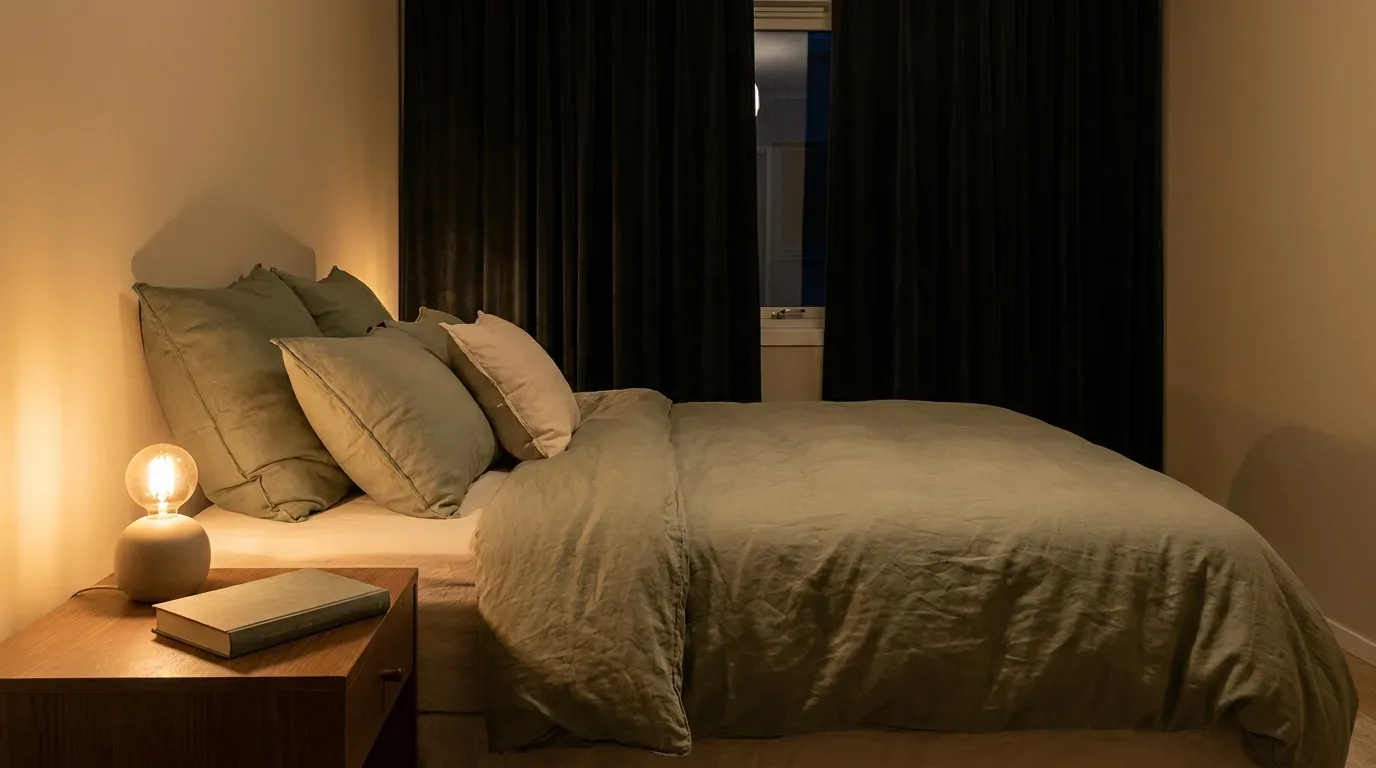
How to create the perfect environment for restful sleep?
Your bedroom should be a sanctuary dedicated to rest. Often, difficulty sleeping is linked to an environment that doesn't promote relaxation.
Transforming your bedroom into an oasis of tranquility is an essential step in the practice of sleep hygiene. Here are some practical tips:
- Control the light: Total darkness is ideal. Invest in blackout curtains or use a sleep mask to block out any light. Even a little light can interfere with the production of melatonin, the hormone that regulates sleep.
- Silence the noises: If you live in a noisy place, earplugs can be a simple and effective solution. Another option is white noise devices, which create a constant, soft sound that masks other disturbing noises.
- Adjust the temperature: A slightly cooler environment is ideal for sleeping. Body temperature naturally drops to initiate sleep, and a cool room helps this process. Most experts recommend something between 18°C and 21°C.
- Invest in comfort: A good mattress and pillows suited to your sleeping position make all the difference. Your bedding should also be comfortable and made of breathable fabrics, such as cotton.
- Create a positive association: Reserve your bed solely for sleeping and intimate moments. Avoid working, eating, or watching television in bed. This helps your brain associate the space exclusively with rest.
What daytime habits influence sleep quality?
Preparing for a good night's sleep doesn't begin an hour before bedtime, but rather from the moment you wake up.
Your choices and habits throughout the day have a direct impact on your ability to fall asleep and stay asleep. Incorporating these practices into your daytime routine can work wonders:
- Expose yourself to sunlight in the morning: As soon as you wake up, try to spend a few minutes in natural light. This helps regulate your biological clock (circadian rhythm), signaling to your body that it's time to be awake and alert.
- Practice physical exercise regularly: Physical activity is a great ally for sleep, as it helps reduce stress and anxiety. However, avoid very intense exercise close to bedtime, as it can have a stimulating effect.
- Be careful with caffeine: Coffee, some teas, sodas, and chocolate contain caffeine, a powerful stimulant. Try to avoid consuming these substances at least six to eight hours before going to bed.
- Moderate your alcohol consumption: Although a glass of wine may make you feel drowsy, alcohol interferes with the quality of deep sleep (REM), resulting in fragmented and less restorative rest.
- Smart naps: If you need a nap during the day, keep it short, between 20 and 30 minutes, and avoid napping in the late afternoon so as not to disrupt your nighttime sleep.

How to create a nightly relaxation and self-care ritual?
Creating a nighttime ritual is the most enjoyable part of sleep hygiene. It's your time to slow down, take care of yourself, and signal to your body and mind that it's time to prepare for rest. Think of it as a daily gift you give yourself.
The first step, and perhaps the most difficult, is Disconnect from screens. The blue light emitted by cell phones, tablets, and computers suppresses melatonin production. Try putting away electronic devices at least an hour before bedtime.
From there, you can put together a routine that works for you:
- A warm and relaxing bath: Warm water helps to relax muscles, and the subsequent drop in body temperature after a bath signals to the body that it's time to sleep.
- Your skincare routine: Transform the act of cleansing and moisturizing your skin into a moment of mindfulness. Gently massage your face, enjoying the textures and aromas of the products. This is a great time to apply those skincare treatments that help your skin recover from daily stress, such as those for someone who needs a... Routine for skin exposed to air conditioning..
- Reading a physical book: Swap the endless feeds of social media for a few pages of a good book. Reading is an excellent way to calm the mind and transport yourself to another reality.
- Aromatherapy: Use a diffuser with essential oils known for their calming properties, such as lavender, chamomile, or sandalwood.
- Meditation or deep breathing: Take a few minutes to meditate or simply focus on your breathing. This helps to lower your heart rate and calm anxious thoughts. A good starting point might be to explore techniques for... Recover your mental energy after a stressful day..
What foods and drinks should be avoided before bed?
What you eat and drink in the hours leading up to sleep can be the villain or the hero of your night. Making smart choices is essential to avoid sabotaging your rest. Avoid consuming the following items close to bedtime:
- Caffeine: As already mentioned, it is the number one enemy of sleep. Be aware of hidden sources of caffeine, such as teas (black, green), dark chocolate, and even some headache medications.
- Alcohol: It may help you fall asleep faster, but the quality of rest will be much lower, with more awakenings during the night.
- Heavy and fatty meals: Foods high in fat, fried foods, or highly seasoned foods put a lot of strain on your digestive system, which can cause discomfort, heartburn, and indigestion, making it difficult to sleep.
- Excess sugar: Sweets and simple carbohydrates can cause spikes in blood sugar, followed by sharp drops, which can disrupt your sleep in the middle of the night.
- Large quantities of liquids: Staying hydrated is crucial, but drinking too much water or any other liquid right before bed will almost certainly result in trips to the bathroom during the night.
If hunger strikes, opt for a light snack rich in tryptophan, an amino acid that helps in the production of serotonin and melatonin. A small banana, a handful of almonds, or a glass of warm milk are good options.
Explore a anti-stress food guide It can offer great ideas.

What to do when anxiety and thoughts keep you from sleeping?
Lying in bed and being overwhelmed by an avalanche of thoughts, worries, and to-do lists is a frustrating and very common experience. When the mind doesn't switch off, sleep doesn't come. Fortunately, there are techniques to calm this mental turmoil.
- Therapeutic writing technique: Keep a notebook by your bed. Before going to bed, write down everything that's on your mind: worries, tasks for the next day, ideas. Taking thoughts out of your mind and putting them on paper can bring a sense of relief and organization.
- 4-7-8 Breathing: This is a simple yet powerful technique. Inhale through your nose counting to 4, hold your breath counting to 7, and exhale slowly through your mouth counting to 8. Repeat 3 to 5 times to slow your heart rate and induce relaxation.
- Focus on the present: Practice mindfulness. Instead of fighting your thoughts, observe them without judgment and then bring your attention to the sensations in your body: the weight of the blanket, the softness of the pillow, the sound of your breathing.
- Get up for a while: If you've been tossing and turning in bed for more than 20 minutes without being able to fall asleep, get up. Go to another room, read a book in dim light, or listen to soft music. Only return to bed when you feel sleepy again. This prevents you from creating an association of frustration and anxiety with your bed.
Frequently Asked Questions about Sleep Hygiene
How many hours of sleep are really necessary?
Most adults need 7 to 9 hours of sleep per night For optimal functioning of the body and mind, as Fiocruz points out, quality is just as important as quantity. It's better to have 7 hours of deep, uninterrupted sleep than 9 hours of fragmented sleep.
Does taking a hot bath before bed help?
Yes! A warm bath about 90 minutes before bed can help. The warming of the body followed by the rapid cooling that occurs upon exiting the bath mimics the natural drop in body temperature that precedes sleep, helping to signal that it's time to rest.
Do relaxing teas really work?
Yes, caffeine-free herbal teas like chamomile, passionflower, lemon balm, and lavender have calming properties that can help relax the mind and body, making them great allies in your nighttime ritual.
Is it true that you shouldn't exercise at night?
It depends on the intensity. High-intensity exercises, such as running or heavy workouts, can increase adrenaline and body temperature, making it difficult to fall asleep if done too close to bedtime. However, light activities like yoga, stretching, or a leisurely walk can actually promote relaxation and improve sleep quality.