
To know Caring for curly hair in your winter routine. It requires much more than just changing the conditioner; it's almost an exercise in endurance against the physics of dry weather.
Advertisements
For those of us who, like me, have curves, the chilly days of 2026 bring that classic dilemma: the comfort of a boiling hot shower versus the integrity of our hair.
The cold air seems to suck the life out of the hair, leaving that rough texture that no amount of regular cream seems to fix immediately.
Below, I've compiled what really works to maintain the dignity of curls when the temperature plummets.
What you will find here
- The collapse of the structure in the cold.
- The hot wash trap
- Ingredients that truly protect
- Conclusion: the game has changed
- Assets that save the day
- The war against friction
- Real doubts
Why does the cold seem to "wilt" our curls?
It's not your imagination; hair really does behave differently when the temperature drops.
The drop in air humidity accelerates the evaporation of internal water in the cortex, which, for us, results in breakage and a porosity that seems endless.
The curl pattern, by its spiral nature, already has difficulty distributing oil from the roots to the ends, and winter only exacerbates this logistical isolation of natural sebum.
There's something unsettling about the thermal shock: we go from a heated environment to the biting wind of the street.
This instability weakens the keratin, and if we don't create a robust lipid barrier, the hair loses its flexibility and "stretches" or gains that undefined volume that we try so hard to avoid.
The shower dilemma: hygiene without trauma.
I know, it's tempting to jump under scalding hot water, but that's the biggest mistake we make. Hot water dissolves the hydrolipidic mantle, our only natural defense.
To Caring for curly hair in your winter routine. Without suffering, I began to adopt the Co-wash Or, more rigorously, use sulfate-free shampoos during this time of year.
The scalp becomes more sensitive and doesn't need harsh detergents that leave it even more exposed.
See how interesting: Benefits of rosemary oil for hair growth
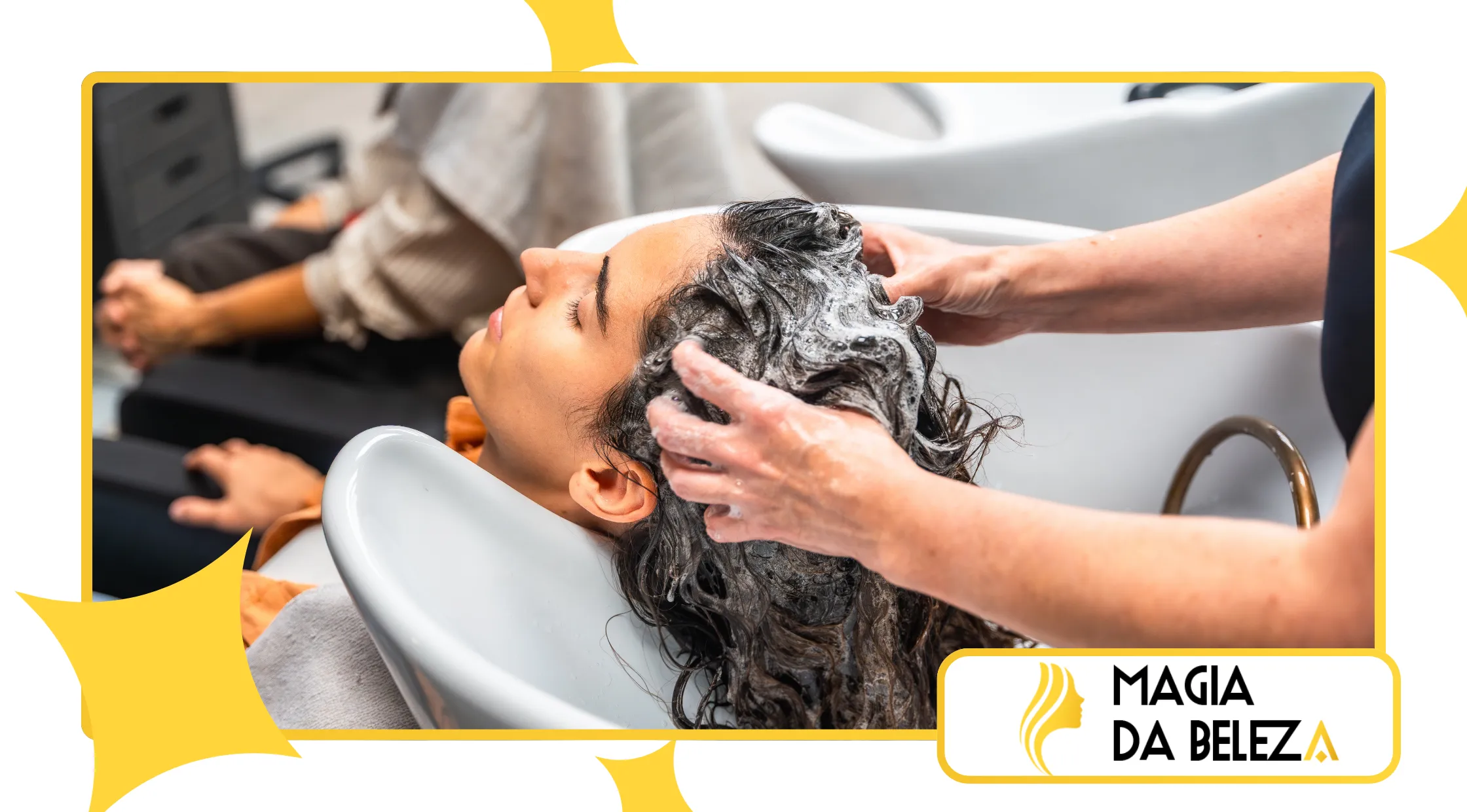
One technique I swear by is pre-shampooing with rich oils. Creating this protective layer before washing prevents the cleansing process from stripping away the nutrients we work so hard to build up. It's about minimizing damage, not just cleaning.
Assets that are more than just a promise.
In 2026, we stopped believing in miracles and started focusing on the science of active ingredients. Hyaluronic acid remains the king of water retention, but shea butter does the hard work of sealing everything in.
Oils like castor and avocado are essential because they provide the density that the cold wind tries to steal. They fill in the cracks in the cuticles, preventing the dreaded "fairy knots".
For those who like to understand what's going on in people's heads, the guidelines of AssoBrazilian Association of Cosmetology They explain well how these components act in the safety of the formulations and in the long-term health of the fiber.
The finishing technique needs to be strategic.
If in summer we seek lightness and balance, in winter the focus is on occlusion. That quick finish is no longer enough. I started using the technique LOC (Liquid, Oil and Cream) as a rule.
Sealing the hair strands with a finishing oil right after applying styling cream creates a film that keeps the moisture "locked in" for much longer.
Another non-negotiable point: never leave the house with damp hair. Besides the health risk, the water can cause internal micro-freezing, which destroys the hair fiber.
++ Hairstyles Designed for Growth: strategic haircuts for those who avoid frequent salon visits.
A diffuser, along with a good heat protectant, is essential. The blast of cold air at the end of the process helps to break down the scales and ensures that the... day after be at least minimally decent.
Assets that make a difference in cold weather
| Hair Active | Main Mission | Why use it now? |
| Panthenol | Water retention | Combats dry air in enclosed spaces. |
| Argan Oil | Extreme sealing | The best shield against the wind. |
| Vegetable Keratin | Mass replacement | It restores the strength that the cold takes away. |
| Ceramides | Cellular cohesion | Keeps the protective barrier intact. |
The silent sabotage of accessories
Woolen scarves and acrylic hats are the biggest enemies of definition.
Constant friction generates a static charge that instantly lifts the cuticles, resulting in that localized frizz at the nape of the neck that's a nightmare. Often, the problem isn't the cream, but the fabric that touches the hair.
The trick is to line your accessories with satin or silk. It's a simple change, but it preserves the curl pattern.
Read more: How to adopt an anti-burnout lifestyle with conscious well-being.
Similarly, the satin pillowcase ceases to be a luxury and becomes a necessity for Caring for curly hair in your winter routine., reducing the revitalization work the following morning.
Internal nutrition: what nobody tells you about caring for curly hair in your winter routine.
We often focus so much on what to put on our hair that we forget that the hair fiber is built from the inside out.
In winter, we drink less water, and this directly affects hair elasticity. Maintaining internal hydration and consuming omega-3 helps keep sebum production balanced, even when metabolism slows down.
I feel that winter invites us to be more meticulous. Nighttime moisturizing, for example, becomes a protective ritual.
Applying pure oils and massaging the scalp helps maintain active blood flow, ensuring that hair continues to grow strong despite harsh weather.
Final Reflection
Facing winter with curly hair doesn't have to be a losing battle. It's just a matter of adjusting your perspective and understanding that what worked in December won't work in July.
By prioritizing nutrition and respecting drying time, the hair responds with shine and definition.
For a more in-depth technical explanation of how skin and hair react to climate change, visit the portal of Brazilian Society of Dermatology It provides a scientific foundation for those seeking to go beyond the basics.
Questions that always come up
Does washing your hair less often cause dandruff?
Not necessarily. The secret is to ensure that, in the few washes you do, your scalp is thoroughly cleaned and, most importantly, completely dried. Accumulated moisture on a cold scalp is the perfect environment for fungi.
How to deal with morning frizz without getting everything wet?
Use a revitalizing spray or just a little oil on your hands to "calm" the hair. Avoid spraying too much water, as it will take longer to dry and may unnecessarily cool the scalp.
Is a heat shield really necessary with a diffuser?
Always. Even if the air doesn't seem that hot, prolonged exposure to dry out all of your curly hair can cause cumulative damage. It's your hair's life insurance.
Can I mix oil into my hair styling cream?
In winter, this "mixture" is very welcome to give a boost Nutritional aid. Helps with weight management and control for those suffering from excess volume caused by dry weather.
Why does my hair look shorter in winter?
Shrinkage can increase due to dryness, which removes water weight from the hair strand. Focusing on nourishment helps the curl become more manageable and its length more apparent.