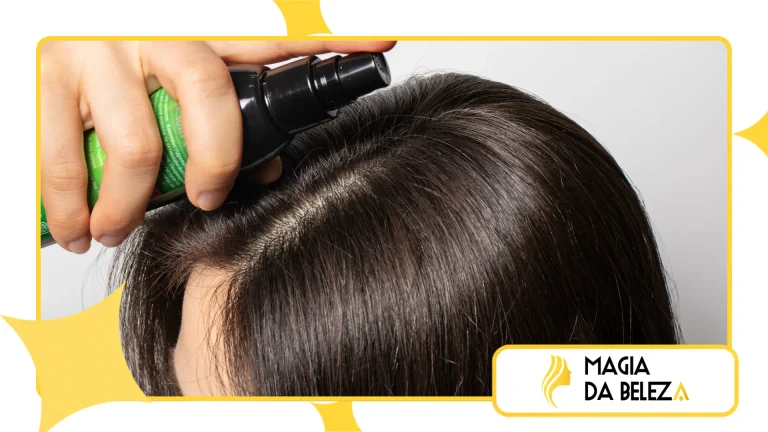

Hair Designed to Grow They are not a passing trend, but a practical response to an increasingly streamlined routine.
Advertisements
Those who avoid frequent salon visits aren't giving up on aesthetics; they're seeking autonomy. The central question shifts from "which haircut is in fashion?" to "which haircut will still look good four months from now?".
Throughout this content, you will understand how hair growth really works, why some hair styles age better than others, and which choices allow hair to grow naturally. The idea is simple: less impulsive maintenance, more strategy.

Summary
- Introduction: Why thinking about the medium-term cut changes everything
- What does planning your hair for growth really mean?
- How does the hair growth cycle work in practice?
- Which cuts evolve best over the months?
- Real data on growth, decline, and maintenance.
- Smart maintenance: less frequency, more strategy
- Mistakes that sabotage visual growth
- When it's time to adjust without compromising length.
- The mindset shift behind the strategic cuts.
- Closing: growing with awareness
- FAQ – Frequently Asked Questions about Hair Growth
What does it really mean to think about cutting corners to grow?
Thinking about a haircut to grow your hair out requires a medium-term vision. It's not just about leaving the salon happy with what you see in the mirror that day, but about anticipating how your hair structure will react to the growth in centimeters.
Very defined cuts, extremely short bangs, or aggressive layering tend to lose their identity quickly. As the hair grows, the style dissolves. And that's precisely where the frustration lies for those trying to lengthen their hair.
When we talk about Hair Designed to GrowWe're talking about a solid base, balanced weight, and layers that follow natural movement. There's no excessive rigidity, but there's no carelessness either. There's intention.
How hair grows — and why that changes how you cut it?
The hair strand originates in the follicle and goes through well-defined phases: anagen (active growth), catagen (transition), and telogen (shedding). According to... American Academy of DermatologyHair grows, on average, between 1 and 1.25 centimeters per month.
It may seem like a small amount, but in a year that number can grow to up to 15 centimeters. The problem is rarely the growth itself. What usually interrupts the project is breakage.
THE Brazilian Society of Dermatology It points out that a daily loss of 50 to 100 hairs is considered normal. Anything outside this range deserves attention.
Still, what often appears to "not grow" is simply a hair breaking before reaching a noticeable length.
There's something curious here: when the cut respects the natural weight, the growth seems faster. Not because it has accelerated biologically, but because the shape doesn't reveal how much time has passed.
Which cuts evolve best over the months?
Some styles mature gracefully. The slightly elongated long bob, for example, allows for a smooth transition to medium-length hair without creating abrupt changes.
The flat base with invisible inner layers reduces excessive bulk, but maintains external alignment.
The U or V-shaped cut, with a soft texture, also stands out for those who want more length at the back without losing fluidity. In these structures, the growth doesn't disrupt the design; it expands it.
The secret lies in moderation. Very short layers age poorly. Radical disconnections require constant maintenance. In contrast, planned structures embrace time.
Read more: Advantages of clarifying shampoo for cleaner hair.
That is the spirit of Hair Designed to GrowCutting doesn't fight growth, it helps it.

Objective data on growth and maintenance
| Factor | Current Data | Source |
|---|---|---|
| Average monthly growth | 1 to 1.25 cm | American Academy of Dermatology |
| Duration of the anagen phase | 2 to 7 years | Brazilian Society of Dermatology |
| Hair follicles in the telogen phase | 10% to 15% | American Academy of Dermatology |
| Daily hair loss considered normal | 50 to 100 threads | Brazilian Society of Dermatology |
These numbers help adjust expectations. Hair growth is biology, not a cosmetic miracle. Products promise acceleration, but science continues to point to genetics, systemic health, and proper care as the real pillars.
Smart maintenance: less frequency, more strategy
Avoiding the salon doesn't mean abandoning hair care. Trimming every three or four months is usually enough to remove split ends without compromising length gain.
There's a persistent myth that monthly trims accelerate hair growth. It doesn't. What trimming does is prevent breakage from traveling up the hair shaft, preserving what has already been achieved.
Furthermore, reducing frequent heat damage also helps. Intense brushing week after week wears down the hair fiber. In growth projects, heat needs to be an occasional ally, not an automatic routine.
Here, it's worth noting that hair styling has become a trend not for aesthetic reasons, but for behavioral reasons.
Consumers are more aware and less willing to engage in expensive and constant maintenance. Strategic trimming responds to this cultural shift.
Mistakes that sabotage visual growth
The first mistake is choosing extremely structured haircuts without considering your own routine. If you don't plan on returning to the salon in six weeks, a highly technical design won't be your ally.
Another common mistake involves successive chemical treatments without adequate intervals. Repeated bleaching weakens the hair fiber, increasing breakage. The length may increase, but it doesn't remain the same.
There's also the illusion of immediate volume. Excessively layered cuts may seem light at first, but they lose definition as the hair grows out. The result is a look that needs correction sooner than expected.
See how interesting: Benefits of nature bathing for reducing stress and anxiety.
Projects Hair Designed to Grow They demand consistency. Form, health, and maintenance frequency need to be aligned.
When is it time to adjust?
Even those who want to grow need small adjustments. Completely ignoring split ends creates a worn and uneven appearance, which gives the impression of neglect.
The difference lies in the intention. Adjusting doesn't mean reshaping. A strategic micro-cut preserves the structure and supports the larger plan.
Do you see how the logic changes? Growing up ceases to be a passive process and becomes a conscious project.
A broader look at this choice.
There's something symbolic about allowing your hair to grow out in a planned way. For years, the market has encouraged constant changes, seasonal cuts, and quick transformations.
Now, we are seeing the opposite trend: fewer impulsive interventions, more gradual construction. It's not just about aesthetics; it's about mindset.
Hair Designed to Grow They reflect this transition. They prioritize continuity over disruption. They value time as an ally, not a threat.

Closing
Growing hair isn't an act of blind patience. It's about strategy, understanding hair structure, and making choices that fit your routine.
When the cut respects the hair's natural growth pattern, it grows almost without drama. There's no "strange" phase every quarter, nor an urgent need for correction.
Ultimately, the question isn't whether the hair will grow—it will. The question is whether the chosen style will allow that growth to happen elegantly.
Those who understand this cut their hair less impulsively and more consciously. And this difference, although subtle, completely transforms the hair journey.
FAQ
Does cutting every month accelerate growth?
No. Growth occurs in the follicle. Frequent trimming only removes damage and improves appearance.
Can I go six months without cutting my hair?
It depends on the structure and health of the ends. In strategic projects, four months is usually the safest interval.
Do layers impede growth?
They don't prevent it, but very short layers can compromise the shape as the strands grow longer.
Does chemistry block growth?
It doesn't biologically block growth, but it increases the risk of breakage, which impairs length retention.
Can curly hair adopt this strategy?
Yes. In fact, planning while respecting the shrinkage factor usually improves definition during growth.