
Scalp care routine for healthy hair It has become a recurring theme in conversations about hair beauty—and not by chance. Gradually, it became clear that strong hair begins long before its visible length. It begins at the scalp.
Advertisements
For decades, the hair industry treated hair as if it were just fiber. It was hydrated, sealed, and reconstructed. Yet, many people continued to live with persistent hair loss or increasingly fragile strands.
There's something curious about this shift in perspective. When the focus moves to the scalp, care ceases to be merely aesthetic and begins to approach a more biological realm, almost like caring for facial skin.
It is precisely at this point that a Scalp care routine for healthy hair It makes sense. Not as a passing trend, but as a more comprehensive way to understand hair growth.

Summary
- What does scalp care really mean?
- How the scalp influences hair loss
- Practical steps for an efficient routine.
- Ideal frequency of each care
- Ingredients that make a difference
- Frequently asked questions about scalp health
What is scalp care and why has it become so relevant?
Scalp care is simply the care directed towards the scalp. It seems simple, but for a long time this area received minimal attention within the hair care routine.
The scalp is home to thousands of hair follicles. Each one functions like a small biological factory responsible for producing hair. When this environment becomes unbalanced, the result quickly becomes apparent in the hair.
Excessive oiliness, product residue, and microscopic inflammation create an unfavorable environment for healthy hair growth. It's like trying to grow a plant in compacted soil.
Therefore, the idea of caring for the base first — and then the length — has gained traction among dermatologists and trichology specialists.
The scalp has ceased to be a technical detail and has become the central topic of conversation.
How does the scalp influence hair loss?
When someone notices hair loss, the most common reaction is to look for solutions focused on the hair strand. Ampoules, masks, supplements. Often, the problem lies just a few millimeters deeper.
Each hair follicle goes through a cycle consisting of growth, transition, and shedding phases. This cycle depends directly on the health of the environment where the hair grows.
Mild but persistent inflammation can shorten the growth phase. The result usually appears months later, when the hair seems to lose density.
Another often overlooked point involves the scalp's microbiota. Just as with facial skin, microorganisms naturally coexist in this area.
When this balance is disrupted—whether due to excess oil, residue buildup, or irritation—the scalp reacts. Flaking, sensitivity, and hair weakening appear as subtle signs.
It is no coincidence that dermatologists have begun to emphasize a Scalp care routine for healthy hair as part of fall prevention.
To learn more about hair health, see [link/website address]. endocrimeta Laboratory.
What are the essential steps in a scalp care routine?
An efficient routine doesn't need to be complex. In fact, too many steps often produce the opposite effect.
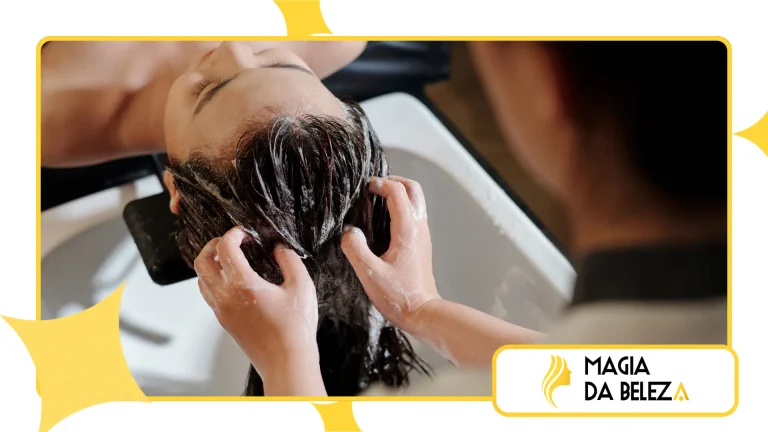
The first point is proper cleansing. Shampoo should remove oil, sweat, and urban particles accumulated throughout the day without compromising the skin's natural barrier.
Next comes scalp exfoliation. This step helps remove dead cells and residue that get trapped around the follicles.
Scalp massage, often overlooked, also plays a significant role. Gentle movements stimulate local circulation and help distribute natural oils.
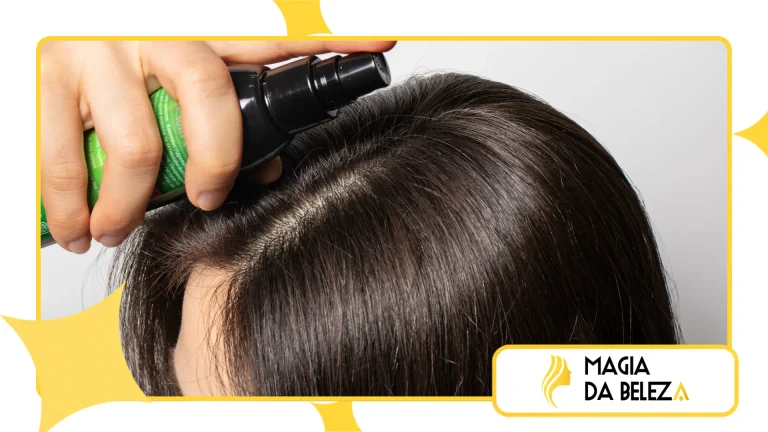
Hair tonics are used as a strategic complement. Formulations with caffeine, niacinamide, or panthenol help to balance the follicular environment.
++ Hairstyles Designed for Growth: strategic haircuts for those who avoid frequent salon visits.
The logic behind this sequence is simple: cleanse, unclog follicles, and maintain scalp balance.

When should each step of the routine be performed?
The ideal frequency varies considerably from person to person. However, some patterns frequently appear in dermatological recommendations.
Oily scalps usually require more frequent washing. Drier scalp types, on the other hand, need longer intervals to avoid irritation.
Read more: Finishing Touches That Work Without a Mirror: The New Reality of Beauty
The table below summarizes common guidelines in scalp care routines.
| Care stage | Recommended frequency | Main benefit |
|---|---|---|
| Washing with shampoo | 3 to 5 times a week | Oil control and residue removal |
| Hair exfoliation | Once a week | Unblocking the follicles |
| Scalp massage | 3 times a week | Stimulating local circulation |
| Hair tonic | Daily or alternate use | Strengthening the root |
Perhaps the most interesting point here is consistency. Small actions repeated over time tend to produce more consistent effects than intensive, sporadic treatments.
Which ingredients truly help with scalp health? Scalp care routine for healthy hair.
In recent years, certain active ingredients have gained prominence in formulations designed for scalp care.
Niacinamide is frequently mentioned for its ability to help regulate sebum production and reduce mild inflammation. It is a relatively versatile ingredient.
Caffeine has also become popular in hair tonics. Laboratory research indicates that it can stimulate follicular activity in certain contexts.
Find out more: How prebiotic fiber improves gut health and well-being.
Another common component is salicylic acid, used in safe concentrations to promote gentle chemical exfoliation.
Panthenol, known for its moisturizing action, helps maintain the balance of the scalp skin and improves the resistance of the hair fiber from the root.
The choice of active ingredients, however, needs to take into account the type of scalp. What works for an oily scalp may not be ideal for someone with sensitive or dry scalp.
Why does consistency in your hair care routine make a difference in hair loss?
Hair grows slowly. This simple detail explains why changes in hair health rarely appear immediately.
The hair growth cycle can last for years. When the scalp improves, the first signs usually only appear after a few weeks or months.
Constantly switching products or interrupting the routine prevents this process from stabilizing.
Therefore, many dermatologists suggest maintaining a Scalp care routine for healthy hair for at least three months before clearly evaluating the results.
During this period, the scalp tends to gradually regain its balance. Hair loss associated with inflammation or excessive oiliness may noticeably decrease.

Conclusion
There's something almost intuitive about caring for the roots first. The hair we see in the mirror is, after all, just the final part of a silent biological process.
When the scalp is in balance — clean, well-irrigated, and free from inflammation — the follicles begin to function under more favorable conditions.
Scalp care routines don't promise miracles. They are not a substitute for medical treatments in cases of genetic or hormonal alopecia.
Nevertheless, they offer a solid foundation for any hair health strategy.
And perhaps that's the biggest change in recent years: realizing that strong hair begins long before the first visible strand.
Those who follow beauty content on specialized platforms, such as the blog magicofbeauty.comYou've already noticed this gradual change in approach.
Frequently asked questions about scalp care
Does scalp care really reduce hair loss?
It can help when hair loss is associated with excessive oiliness, inflammation, or a buildup of residue on the scalp. Hormonal or genetic cases require dermatological evaluation.
Does washing your hair frequently damage the hair strands?
Not necessarily. Washing removes hairs that were already in the natural shedding phase and keeps the scalp balanced.
Can scalp exfoliation be done every week?
Generally, yes. However, people with sensitive scalps should watch for possible signs of irritation and reduce frequency if necessary.
Does scalp massage really work?
Gentle massages help stimulate local circulation and provide a feeling of relaxation. With consistency, they can contribute to a healthier follicular environment.
How long does it take to notice improvement?
Changes in hair health usually appear between three and four months, a period long enough to follow part of the natural hair growth cycle.
++ Learn how to care for your scalp with Eudora Siàge Dermohair.