Learn to choose fine loose powder for sealing It's the ultimate secret to ensuring long-lasting makeup with a velvety finish, completely free from a heavy or cracked look.
Advertisements
When the product is too thick or applied incorrectly, buildup in fine lines becomes inevitable.
This practical guide presents the essential criteria for texture, ingredients, shades, and application techniques to help you choose the right cosmetic product.
Article summary:
- What characterizes a loose powder with a fine texture?
- Key criteria to consider before buying
- How to choose the ideal color for your skin tone.
- Comparison chart: Loose Fine Powder vs. Pressed Powder
- Step-by-step guide to setting makeup without it feeling heavy.
- Frequently Asked Questions (FAQ)
What characterizes a loose powder with a fine texture?
Loose powder with advanced micronization undergoes a manufacturing process that reduces its particles to extremely small sizes.
This technology allows the product to be deposited onto the skin in a fluid manner, creating a transparent veil that sets the foundation and concealer without adding a visible layer of matter.
Unlike pressed powder, which requires oil-based binders and wax to maintain its solid form, the loose powder version has a formulation free of these dense components.
This ensures unparalleled lightness, control of excess shine throughout the day, and perfect adaptation to anatomical facial movements.
Understanding the structural differences of the product helps prevent common makeup mistakes.
By opting for lightweight particles, you allow the skin to breathe better, preventing clogged pores and the accentuation of fine lines under the eyes.
The importance of a velvety finish in makeup.
The velvety finish harmonizes the skin's texture by smoothing the appearance of enlarged pores and minor imperfections.
It offers the ideal balance between natural shine and excessive mattification, guaranteeing a refreshed and elegant look throughout wear.
When sealing is done with heavy cosmetics, the skin loses its natural radiance and takes on a dry appearance.
++ Soft glam makeup trend for daytime events.
Ultrafine particles reflect light diffusely, promoting the famous effect. blur photographic without compromising skin hydration and flexibility.
Essential criteria for choosing fine loose powder for sealing.
To know choose fine loose powder for sealing It requires attention to the labels and technical specifications provided by the manufacturer.
Not all products labeled as thin deliver the lightness needed for the delicate eye area.
Carefully evaluate the basic components before making your decision. The first point to consider is the list of ingredients.
Formulas enriched with high-purity silica, rice starch, and polymer microspheres ensure a silky feel and high oil absorption capacity without drying out the superficial epidermal layer.
Read more: Guide to chocolate brown lipstick trending among celebrities
The presence of moisturizing ingredients, such as micronized hyaluronic acid or vitamin E, represents a significant advantage.
These ingredients help retain the skin's natural moisture, preventing the powder from absorbing water from the concealer and causing the unwanted cracked effect.
Texture to the touch and fluidity tests
To test the quality of the cosmetic, apply a small amount to the back of your hand or the back of your fingers.
Gently rub the product between your fingers: the high-quality powder should disappear almost completely into the skin, leaving only a soft touch.
If you feel noticeable grains or a sandy texture, the product does not have the proper level of micronization for delicate sealing.
++ Mugwort for skin: why this active ingredient has gained popularity in K-beauty.
High-quality cosmetics flow almost like a liquid powder, instantly adapting to the skin's contours without accumulating in lines.
Ingredients to avoid on mature or dry skin.
Avoid formulas that contain a high concentration of common talc as a main ingredient if you have dry or mature skin.
Traditional talcum powder has larger, more opaque particles, which tend to absorb natural moisture and accentuate existing fine lines.
Give preference to modern formulations based on treated talc, vegetable silica, or modified starch.
These components reduce friction with the skin and ensure a much more natural finish, while maintaining the flexibility needed to express yourself without permanent marks.
Choosing the right color and finish for your skin tone
The choice of loose powder shade directly affects the final result of the makeup.
An incorrect shade can make the skin look ashy, alter the color of the foundation, or create a whitish, blown-out effect in photographs taken with a direct flash.
There are two main categories on the market: translucent powders and color-adaptive powders.
Understanding each individual's behavior ensures an assertive choice for their daily needs or professional endeavors.
Translucent powder versus colored powder
Traditional translucent powder is formulated to be invisible after application, while maintaining the exact color of previously applied creamy products.
However, on dark or medium-dark skin tones, translucent white powders may leave a grayish residue visible under strong lighting.
For medium to dark skin tones, loose powders with yellowish, pinkish, or banana undertones are best suited.
They seal in the products while preserving the skin's natural warmth, neutralizing dark circles and precisely evening out skin tone.
The dreaded "flashback" effect“
The phenomenon of flashback occurs when the components of the powder reflect the light from the camera back onto the lens.
This happens mainly with products containing a high percentage of titanium dioxide, zinc oxide, or non-micronized silica.
To avoid this problem at nighttime events, opt for cosmetics that are dermatologically tested for professional photography.
Applying a thin layer and properly polishing with a soft brush removes the excess and completely eliminates the risk of white spots on photos.
Comparison: Loose Fine Powder vs. Traditional Compact Powder
To help you choose the ideal product for your daily needs, the table below summarizes the main structural and functional differences between fine loose powder and traditional pressed powder.
| Evaluation Criteria | Loose Fine Powder | Traditional Compact Powder |
|---|---|---|
| Particle Size | Ultra-thin and micronized | Medium to dense (compacted) |
| Effect on the Skin | Light, natural and velvety | Greater coverage and matte finish. |
| Main Indication | Makeup setting and eye area | Quick touch-ups and shine control |
| Risk of Cracking | Very low on prepared skins | Moderate to high in double layers |
| Convenient Transportation | Requires careful handling. | Highly practical for carrying in your bag. |
The chart clearly demonstrates that loose powder is the superior choice for those seeking uniform sealing and an imperceptible finish.
Compact powder remains useful for spot touch-ups in the center of the face throughout the day.
How to set makeup without it feeling heavy: A practical step-by-step guide.
Learn to choose fine loose powder for sealing It's only half the battle; the correct application technique guarantees complete success of the look.
Using the right tools and the correct amount of product transforms the durability of the look.
Before applying any layer of powder, make sure your skin is properly moisturized.
Pre-hydration creates a protective barrier that prevents the powder pigments from absorbing water from the creamy products in your initial preparation.
Remove any excess creamy product: Before applying powder, use a clean sponge to dab the under-eye area, removing any concealer buildup in the lines.
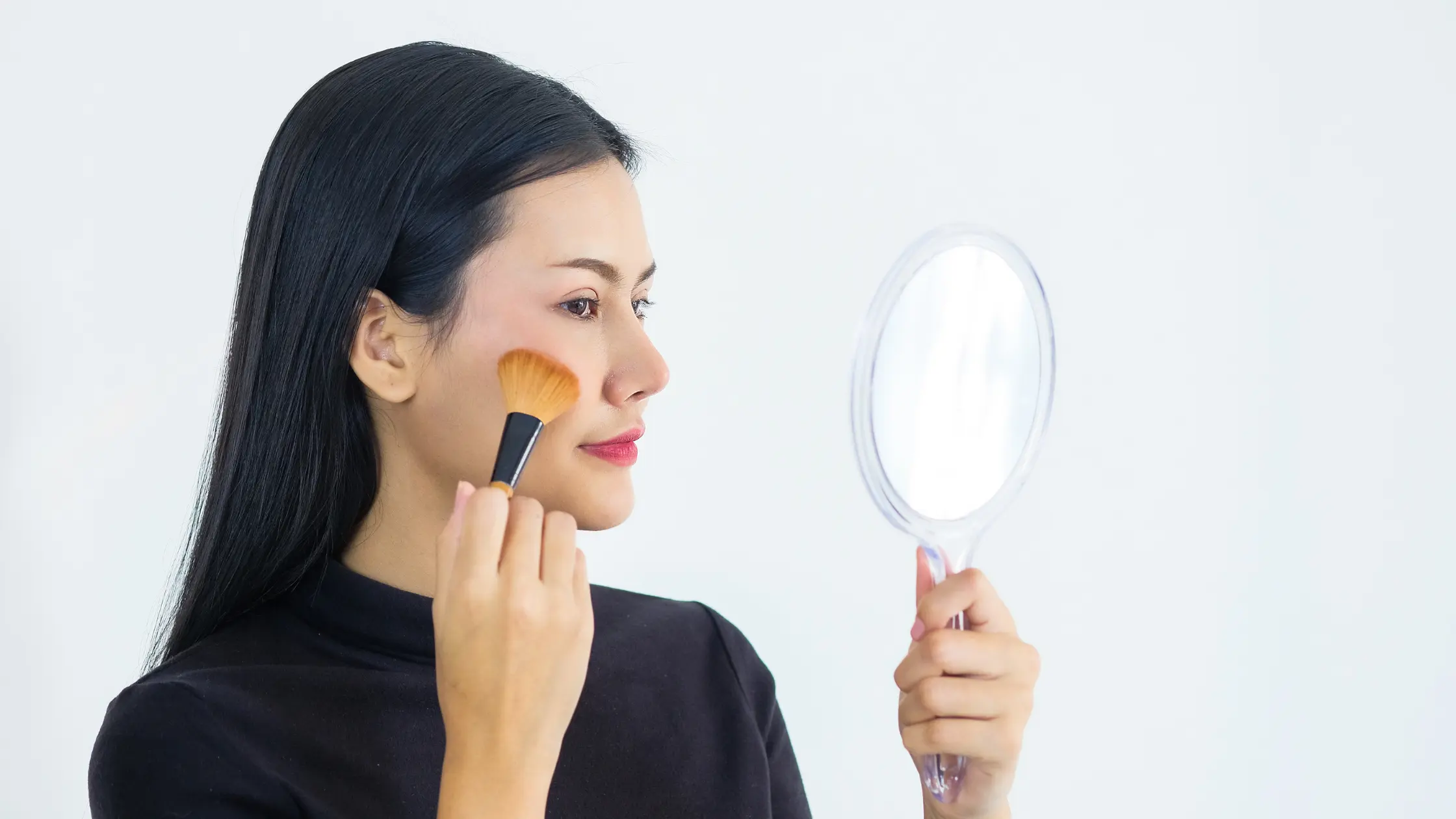
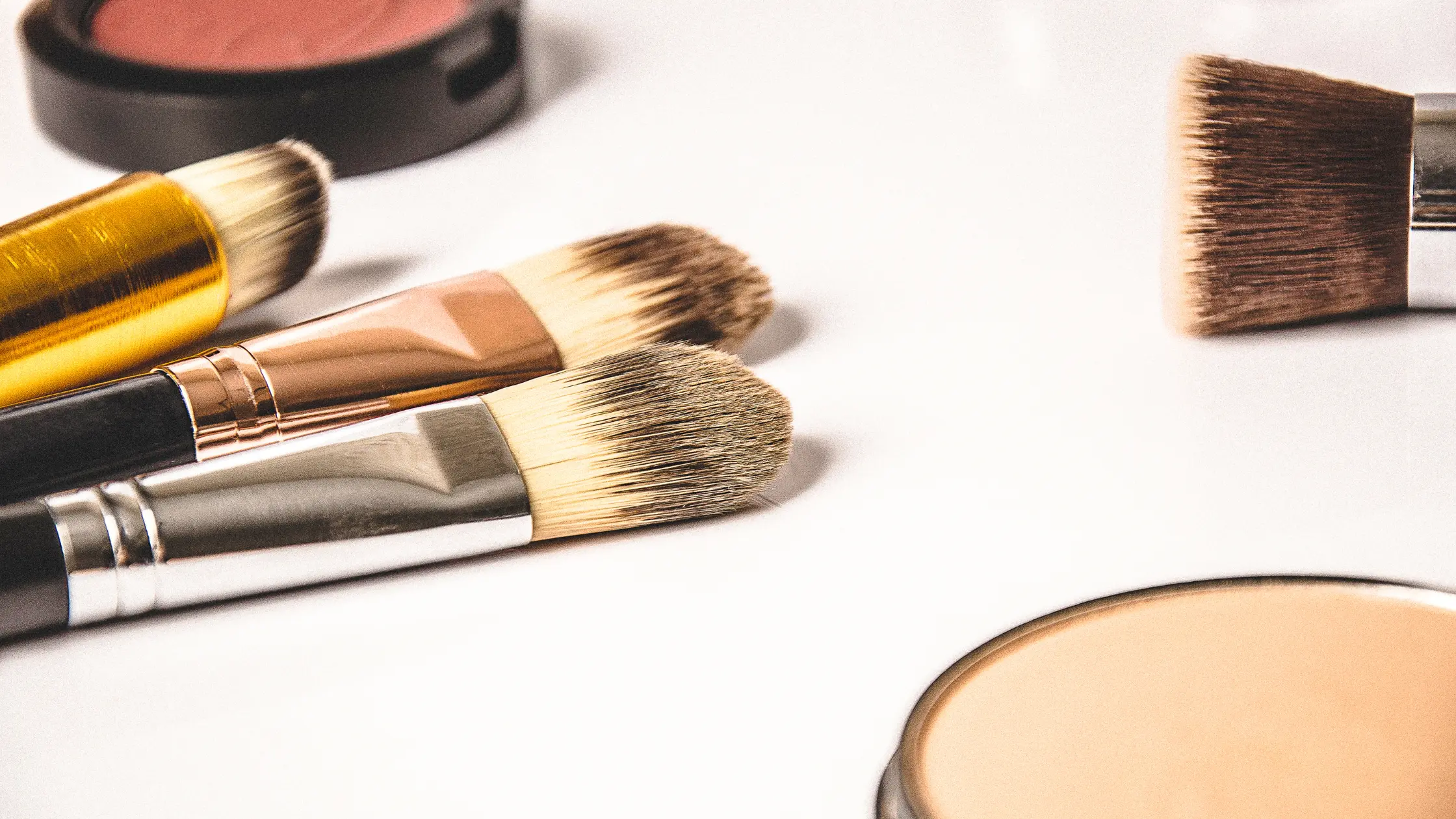
Load the tool correctly: Press a velvety fabric tassel or soft brush into the loose powder and remove any excess product on the back of your hand.
Apply with precision: Gently press the tassel against your skin using stamping motions, without rubbing. Focus on the T-zone and under-eye area.
Perform the final polishing: Use a large, extremely soft brush to sweep away any remaining residue, ensuring an invisible transition into the skin.
Ideal tools: Fabric tassel or soft brush?
The choice of tool depends on the desired level of fixation.
The triangular velvet tassel ensures better powder adhesion in hard-to-reach areas, making it perfect for precisely setting concealer and ensuring long-lasting wear throughout the day.
The duo fiber brush, or very fluffy powder brush, delivers an even lighter and more dispersed application.
It's the perfect option for those with mature skin or who are simply looking to seal specific areas of the face with extreme subtlety and speed.
To learn more about cosmetic formulations and the safety of ingredients used in facial products, consult the guidelines for regulating personal care products on the website. National Health Surveillance Agency (ANVISA).
Care should be taken when measuring the amount of product.
The most common mistake when setting makeup is trying to fix it by applying an excessive amount of powder all at once, the famous "do-it-all" technique. baking excessive.
Excess product absorbs moisture from the creamy base, resulting in a stiff texture that is prone to cracking.
Build up the seal in almost invisible layers. Apply a minimal amount, observe how the skin reacts, and add a little more only to areas that tend to be oily, such as the sides of the nose, center of the forehead, and chin.
Maintaining healthy skin under makeup requires proper removal at the end of the day.
To learn about studies on the impacts of makeup on the skin barrier and dermatological health, access the scientific library of [website/resource name]. National Library of Medicine.
Frequently Asked Questions
Can people with dry skin use fine loose powder?
Yes, as long as the skin is well moisturized before applying makeup.
The micronized loose powder deposits an extremely light layer that sets creamy products without absorbing the skin's natural moisture, preventing a feeling of tightness.
How can you tell if loose powder will cause a flashback?
Test the product by applying a layer to your skin and taking a photo with your phone's flash activated in a dark environment.
Avoid products with a high concentration of physical sunscreens, such as titanium dioxide, in the composition of your night powder.
Can I apply loose powder all over my face?
Ideally, loose powder should only be applied to areas that need setting or shine control, such as the under-eye area and the T-zone.
Leaving the peripheral areas of the face free of powder preserves the skin's natural glow and radiance.
What is the difference between translucent powder and banana powder?
Traditional translucent powder is neutral or off-white, suitable for light to medium skin tones.
Banana powder has a yellowish pigmentation, making it ideal for medium, tan, and dark skin tones, as it prevents a grayish appearance after application.
Conclusion
To know choose fine loose powder for sealing It's a crucial step towards achieving long-lasting, elegant makeup with a professional finish.
By prioritizing products with micronized particles, moisturizing ingredients, and a shade that matches your skin tone, you ensure flawless coverage without compromising your natural glow.
Remember to properly prepare your skin with specific moisturizers before starting your makeup, and use targeted tools to apply only the necessary amount of cosmetic.
The combination of good ingredients with a gentle technique guarantees a radiant, buildup-free look all day long.
Experiment with different textures and adjust the amount to find the ideal setting routine for your skin type.