
Taking care of chemically treated hair It is an easy task for some, and difficult for others.
Advertisements
Chemically treated hair requires attention. Anyone who has undergone processes such as bleaching, straightening, straightening or relaxing their hair knows all too well the impact this can have on their hair.
The shine fades, the touch changes, the strength diminishes. And when care fails, the consequences are not long in appearing.
The good news is that it is possible. take care of chemically treated hair at home, with real, consistent and safe results. You don't need to rely on a salon to keep your hair healthy.
The secret is to know the hair structure, understand what each chemical process changes, and respect the hair's time and needs.
This path requires dedication, of course. But it also gives you autonomy. Because taking care of your hair at home doesn't mean improvising. It means knowing, feeling, adapting. And it all starts here.
Keep reading and discover how to transform your hair routine into a truly professional treatment without leaving your home.
The real impact of chemistry on hair
Every chemical intervention modifies the structure of the hair. This is how progressive straightening aligns, bleaching lightens, and relaxing loosens curls.
However, by doing this, the hair loses some of its natural resistance. The cuticles open, the cortex undergoes changes and the external protection weakens.
Over time, this makes the hair more porous, less elastic, and more susceptible to breakage. Dryness appears, shine disappears, and frizz becomes routine.
Many of these signs are silent at first, but quickly intensify if care is not taken to keep up with the chemistry.
Therefore, those who have chemically treated hair need to pay extra attention. It’s not just about aesthetics. It’s about rebuilding what was removed and protecting what’s still strong. And this can — and should — start at home.
Read also: Post-Progressive Care: How to Keep Your Hair Healthy and Shiny
Recognize your hair's signs
Damage isn't always immediately visible. Sometimes it appears gradually. A thread that gets tangled easily. A tip that never stays straight. A rough feel that doesn't go away even after washing.
These signs show that the hair is crying out for help. And the sooner you act, the greater the chance of recovering its vitality. Chemicals, by themselves, do not destroy it.
The problem is accumulation without replacement. When hair undergoes repeated changes, without time to restore itself, it loses its responsiveness.
Learning to read your hair’s signals is the first step to knowing exactly what it needs. And it’s this listening that turns any care into a real treatment.
The ritual begins in the bath
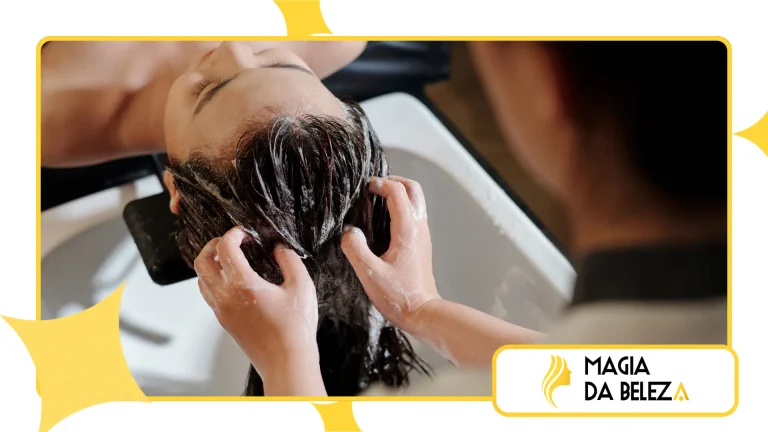
Bath time can be more than just a cleansing session. It’s where it all begins. Choosing the right shampoo determines how your hair will behave in the following minutes.
Very aggressive products, with excess sulfate, can strip the scalp of its natural oils and worsen the dryness caused by chemicals.
But the solution isn’t just sulfate-free products. It’s the combination of efficient and gentle cleaning.
A shampoo that respects the pH of your hair starts the recovery process. It prepares the ground for the treatments that come later.
Water is also part of the process. Too hot and it will be aggressive. Too cold and it won't clean properly. The ideal temperature is lukewarm, which will gently dilate the cuticles and allow the active ingredients in the next steps to penetrate better.
Treatment that really repairs
After cleansing, your hair is receptive. And that’s where treatment comes in handy. The right mask can do much more than soften. It can rebuild, nourish and restore elasticity.
Chemically treated hair requires a schedule. But this doesn't mean a rigid routine. It means intelligently alternating the three pillars: hydration, nutrition and reconstruction.
Knowing when one is missing is key. And for that, there is no magic formula — there is observation.
Hydration restores water. Nutrition restores lipids. Reconstruction restores proteins. And each one acts in a different way, at a different time, with a different purpose. When combined with logic and consistency, they transform even the most damaged hair.
Protection is not optional
Taking care of chemically treated hair also means protecting it. The heat from straighteners, blow dryers, and sun exposure — all of these things damage your hair even more when chemicals are involved.
Using heat protectants before using any heat source is not a luxury. It’s a necessity. They create a barrier between the aggressor source and the hair fiber. And this barrier can be the difference between maintaining shine or facing breakage.
Likewise, protecting your hair from the sun, chlorine, salt and pollution is part of your daily care routine. Hats, leave-in products with UV filters, and the simple habit of rinsing your hair after a day out can all help immensely.
Touch makes a difference
A lot of damage happens outside of the shower. In the way we comb, tie, and sleep. Chemically treated hair does not react in the same way as natural hair.
It needs gentleness. Care when detangling. Be careful not to use tight elastic bands, aggressive combs or excessive friction with towels.
Swapping your regular towel for a thin cotton one or an old t-shirt can help. Using a satin pillowcase can help prevent friction during the night. These are small changes that, when added together, have a direct impact on the health of your hair.
Careful touch is also a form of listening. When you feel the thread calmly, notice its texture, observe its response to your touch, you understand more. And this teaches you to take better care of it.
Food and routine also treat
Hair reflects what happens inside. Vitamins, minerals, water. All of this directly influences its strength, hair loss, and shine. A poor, unbalanced, or inflammatory diet can compromise even the best hair treatment.
Including foods rich in iron, zinc, biotin and protein helps your hair grow stronger. Drinking water regularly keeps your hair hydrated from the inside out. Avoiding stress levels or sleepless nights also helps.
Those who take care of their hair from the inside, reap the results from the outside.
Results that come with time
There are no miracles. But there is a process. Taking care of chemically treated hair at home requires patience. The results appear over time, with repetition, and with consistency.
The secret is to transform care into a ritual. A moment of self-care. Because hair is not just part of your appearance. It carries your identity, history, and self-esteem. And when you learn to take care of it with affection, it responds.
Questions About How to Care for Chemically Treated Hair
Do people with progressive hair need reconstruction frequently?
Yes, since the chemicals alter the internal structure of the hair. Reconstruction helps restore strength and prevent breakage.
Can I do hydration every week at home?
You can and should. Frequent hydration helps maintain softness and water balance, especially after chemical procedures.
What is the best oil for chemically treated hair?
Oils such as argan, coconut and avocado are good allies. They nourish, seal the cuticles and protect against external aggressions.
Can chemically treated hair be blow-dried daily?
You can, as long as you use heat protector and control the temperature. Excessive heat without protection damages the hair even more.
Do I need to use specific products for chemically treated hair?
Yes. They have formulas designed to restore what chemicals remove, as well as protect the hair fiber from further damage.