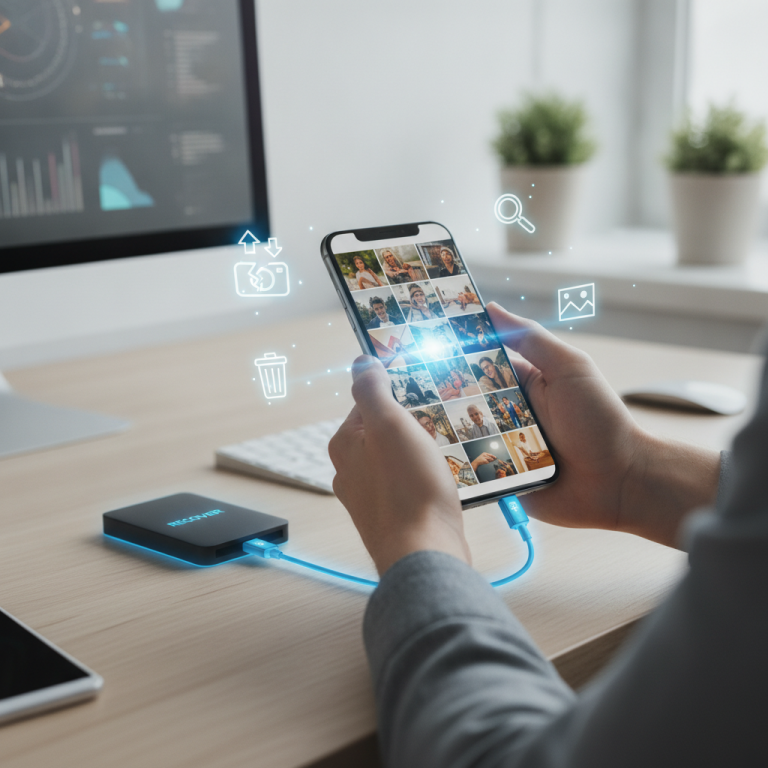

Have you ever stopped to think about how your cell phone can know your body better than you do? The idea seems exaggerated, but with the evolution of Wellness Tech, this is getting closer and closer to reality.
Advertisements
Wellness technology is no longer a trend: it’s a routine. And it’s not just about step counters or hydration reminders.
The new generation of apps and devices monitor heart rate, analyze sleep patterns, detect emotional swings and even warn of potential crises before they happen.
It’s no longer a luxury, it’s a self-care tool. But to what extent is this positive? And do we know how to use all of this in the right way?
When your cell phone becomes your physiological mirror
Imagine waking up in the morning and, before you even get out of bed, knowing how you slept, whether your stress levels are higher than normal, and whether your breathing has become irregular during the night.
This isn’t science fiction. A simple smartwatch, connected to a well-calibrated app, does this job every day. And it doesn’t just collect data. It translates invisible signals from your body into understandable messages.
A McKinsey survey showed that 70% of wellness technology users feel more motivated to adopt healthy habits after they start monitoring their physical and mental indicators. The reason? Consciousness.
When you see in numbers how anxiety changes your heart rate or how lack of sleep reduces your focus, care stops being theoretical and becomes action.
But this monitoring is not only useful for those who already have a fitness routine. Quite the opposite. A real example is that of a retired teacher in Recife, who started using a breathing app to monitor her blood pressure.
Without knowing exactly how it worked, she just followed the guided exercises every night. In three months, she reduced her medication dose with medical supervision. No diet, no gym, just routine and digital discipline.
The body speaks, and now someone is listening
Wellness Tech works like a personal radar. Before, you had to wait for the body's signals to appear in an obvious way: pain, dizziness, insomnia. Now, devices detect changes before symptoms even appear.
A smartwatch can identify mild cardiac arrhythmias. A smart ring can detect subtle changes in body temperature, indicating early-stage infections. A mood app can detect patterns of emotional changes that you might not even notice in your daily life.
This completely changes the way we relate to health. Prevention is no longer something distant and becomes a daily conversation. A man in Florianópolis, for example, started tracking his stress levels with a simple app.
When he noticed that his rates always increased after long meetings, he began adjusting his schedule to include breaks. The result: fewer anxiety attacks, more productivity and a completely new perception of himself.
And here comes the question: are we ready to deal with so much self-knowledge?
Information can liberate or paralyze
Having access to data about your body is empowering. But it can also be scary.
When technology starts showing you numbers you don't understand or variations that seem threatening, information overload can turn into anxiety.
The challenge of Wellness Tech is not just to deliver data. It is to translate, guide and emotionally protect the user.
It's like having a mirror that doesn't just show your image, but everything you're feeling inside. And like any mirror, it can be cruel if you don't know how to interpret the reflection.
An app that warns you about irregular sleep needs to come with practical tips, not just alerts. A device that detects rapid heartbeats should teach you how to breathe deeply, not just display scary graphs.
That's why more and more apps are including psychologists in the development process. And the best devices are not the most technological. They are the most human. Those who know that health is not just about numbers, but also about understanding, empathy and personal rhythm.
Wellness technology is not a magic solution
It is important to understand that Wellness Tech does not replace doctors or treatments. It serves as support. A magnifying glass for everyday life.
It can prevent aggravation, motivate changes and create new routines. But it should never be used as a final diagnosis. The human touch is still irreplaceable.
A young entrepreneur in Belo Horizonte used apps to manage her sleep, diet, and productivity. Even with all the alerts up to date, she began to feel extremely tired. The data didn’t indicate anything wrong.
When she went to see a doctor, she discovered an iron deficiency that only showed up in a blood test. Technology didn't fail her. It just showed her what was within her reach. And she understood that well-being is a partnership, not complete automation.
It's like trusting a GPS. It shows you the way, but it's up to you to decide whether to follow it, stop, ask questions or recalculate.
The Future of Wellness Tech is Invisible
If devices already monitor sleep, stress, food and movement today, what will come next? The answer seems to lie in integration.
We will increasingly see systems connecting data from different sources: watches, scales, meditation apps, smart toothbrushes, sensors in the bed, and even the bathroom mirror with artificial intelligence.
The goal will no longer be just to measure, but to anticipate. Prevent crises before they happen. Personalize recommendations. Create adapted routines.
The Wellness Tech of the future will be less visible and more integrated into your life. You won’t need to open the app. It will have already done its job.
And that’s no exaggeration. A pilot project in London is already monitoring cardiac patients with skin sensors and sending signals directly to the medical team when something goes wrong. The patient doesn’t feel a thing. The doctor gets the alert. And care happens effortlessly.
Questions about Wellness Tech and its uses in everyday life
Is Wellness Tech only for gym-goers?
No. It is for anyone who wants to monitor their health in a practical way, including seniors and beginners.
Do these apps replace doctor's appointments?
Absolutely not. They are complementary, they help with prevention and monitoring, but they do not replace a doctor.
What if the data makes me anxious?
Choose apps with accessible language and a focus on guidance, and always seek to interpret the numbers with professional support.
Are expensive devices better?
Not necessarily. The most important thing is consistency in use and understanding what is being monitored, not just the price.
Is it worth starting with a simple app?
Yes. Small daily changes, like tracking your sleep or breathing, can yield significant results over time.