
Skin diagnostic technologies that are gaining traction in 2026.
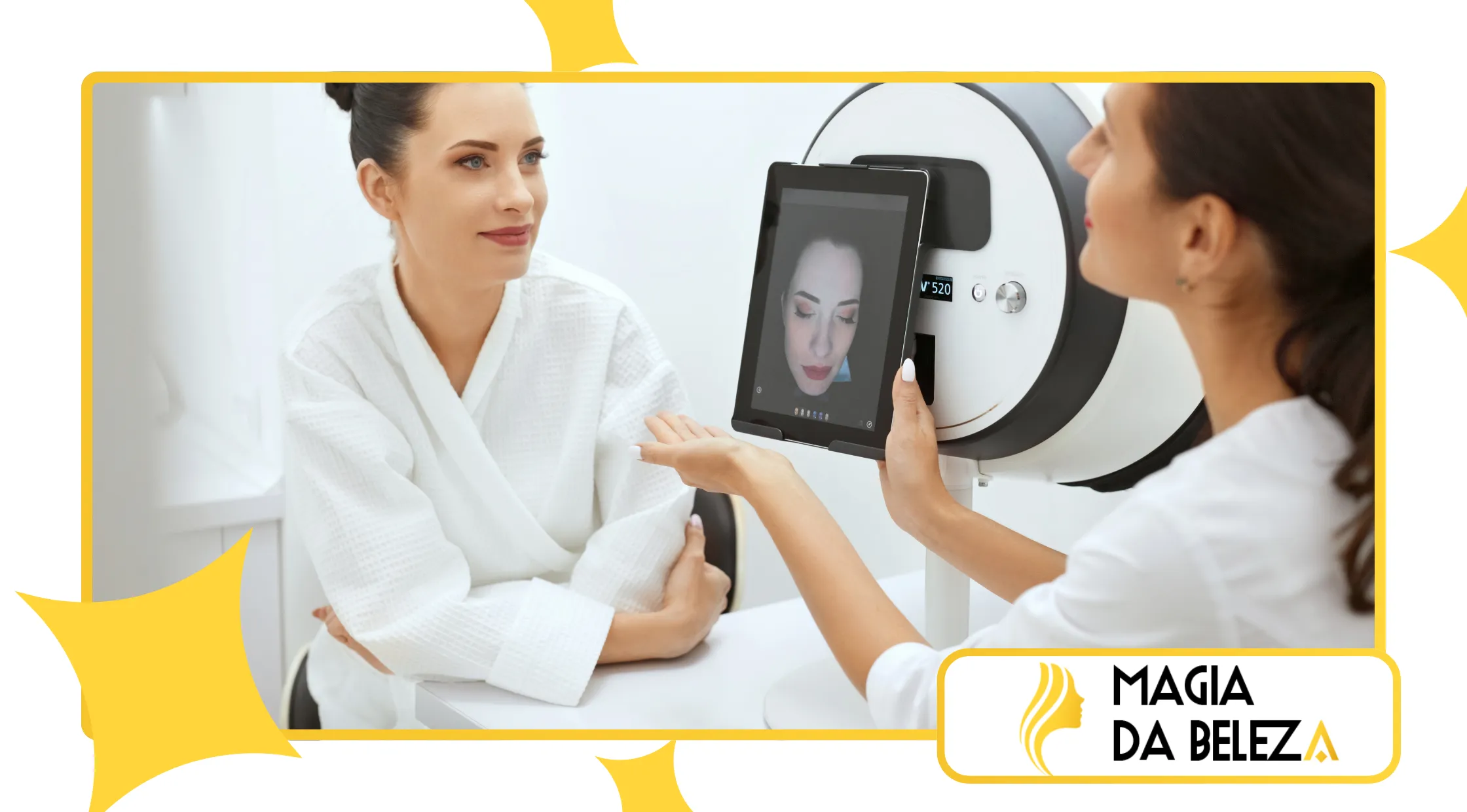
To the skin diagnostic technologies They reached an unprecedented level of precision by 2026, transforming the frontier between clinical dermatology and biophotonic engineering.
Advertisements
In this scenario, skin analysis has ceased to be purely visual and has become an applied data science, enabling early interventions and personalized treatments with mathematical rigor.
Summary
- What defines the new diagnostic standard?
- How does Multimodal Artificial Intelligence work in the clinic?
- Why is hyperspectral imaging disruptive?
- Which biosensors monitor skin health today?
- Table: Evolution of diagnostic methods
- Conclusion and FAQ
What defines the new standard for skin diagnosis?
Modern dermatology in 2026 has consolidated the use of digital biomarkers, which allow the identification of pathologies even before the manifestation of visible clinical symptoms in the patient's epidermis.
To the skin diagnostic technologies Current technologies use structured light and depth sensors to map facial and body morphology, identifying microscopic variations in texture and pigmentation.
This advancement reduces reliance on subjective methods, offering specialists a solid foundation of quantitative data that facilitates monitoring the progress of aesthetic and therapeutic treatments.
Advertisements
The accuracy of these systems is fundamental for differentiating between benign and malignant lesions, optimizing workflow in clinics and increasing patient safety in oncological screenings.
How does Multimodal Artificial Intelligence work in the clinic?
Unlike the rudimentary versions from years ago, the AI of 2026 operates in a multimodal way, integrating high-resolution images with environmental exposure data and individualized genetic predisposition.
The application of these skin diagnostic technologies It allows for real-time comparative analysis with global databases, ensuring accurate diagnoses for all phototypes on the Fitzpatrick scale.
This technology does not replace the doctor, but acts as an ultra-attentive "second pair of eyes," capable of detecting cellular patterns that would escape human vision during a conventional dermatoscopic examination.
To understand the ethical and technical standards required for the use of these tools, please consult the guidelines of... Brazilian Society of Dermatology (SBD), which regulates the practice in the country.
The convergence of computer vision and clinical experience results in much more accurate prescriptions, minimizing the risk of adverse reactions and maximizing the biological results of the prescribed active ingredients.
Why is hyperspectral imaging disruptive?
Hyperspectral imaging captures information at multiple wavelengths, revealing the chemical composition of tissues and oxygen saturation in the cutaneous microcirculation in a non-invasive way.
By adopting such skin diagnostic technologiesAdvanced centers are able to visualize the distribution of melanin and hemoglobin in deep layers, something impossible with ordinary digital photographs or simple dermatoscopes.
This depth of analysis is crucial for treating complex vascular conditions and monitoring scarring processes, allowing for immediate adjustments to laser parameters and other technologies.
++ Is skin fasting a myth or a valid trend for women's skin in 2026?
Spectral mapping provides a "biological signature" of the skin, making it easier to detect areas of subclinical inflammation that can lead to premature aging or the appearance of future age spots.
What biosensors monitor skin health today in skin diagnostic technologies?
Epidermal biosensors, also known as "epidermal electronics," are ultra-thin adhesive patches that continuously monitor physiological parameters such as sweat pH, transepidermal water loss, and UV radiation.
These skin diagnostic technologies They send data directly to telemedicine systems, allowing dermatologists to monitor recovery from surgical procedures or the stability of chronic diseases remotely.
For patients with compromised skin barriers, these sensors function as an early warning system, indicating the need for hydration or environmental protection before tissue damage occurs.
Read more: Skin care using retinol: frequency and precautions
Integrating this data into the user's lifestyle allows for a routine of skincare dynamic, which adapts to climatic variations and stress levels detected by the sensors.

Evolution of Diagnostic Methods (2022 vs. 2026)
The table below illustrates the technological transition that defines the standard of excellence in current dermatology, focusing on precision and patient experience.
| Analysis Criteria | Traditional Method (Until 2022) | Innovation in 2026 | Clinical Impact |
| Sun Damage | Wood's lamp | Multispectral Fluorescence | Deep damage mapping |
| Hydration | Basic bioimpedance | Nanofluidic Sensors | Actual measurement of skin barrier |
| Pigmentary Lesions | Control photos | Predictive AI Evolution | High-precision cancer screening |
| Personalization | Skin type (Dry/Oily) | Digital Epigenetic Profile | Real-time adaptive formulas |
Data Science Applied to Skin Longevity: Skin Diagnostic Technologies
The strategic use of these tools in 2026 demonstrates that skin health is, above all, a matter of prevention based on solid evidence and constant monitoring of tissue biology.
Integrate the skin diagnostic technologies Following a daily care protocol means embracing preventive dermatology that values cellular integrity and aesthetic longevity in an ethical and safe manner.
++ Is your routine inflammatory? Common habits that affect your well-being.
Current trends point towards increasingly invisible devices and more human-like algorithms that respect biological diversity and offer personalized solutions for the specific needs of each individual.
A commitment to diagnostic accuracy and responsible innovation ensures that patients receive the best that science can offer, combining comfort, speed, and clinically proven results.
Conclusion
The advance of skin diagnostic technologies It has established itself as the cornerstone of modern dermatology, where technical precision and human care work in complete synergy to achieve superior results.
By investing in high-performance diagnostics, patients and professionals ensure a level of predictability and safety that defines the new gold standard for skin health and well-being in 2026.
For more information on the future of digital health and innovations in biotechnology, visit the official website of [organization name]. World Health Organization (WHO).
FAQ – Frequently Asked Questions
Are new skin analysis technologies safe for everyone?
Yes, current technologies are non-invasive and use non-ionizing light or passive sensors, making them safe for all skin types and ages.
What is the advantage of AI compared to a standard dermatological exam? AI can analyze patterns on a microscopic scale and compare millions of cases simultaneously, increasing the accuracy in the early detection of skin abnormalities.
How can I access these advanced diagnostics?
Many of these technologies are already available in leading dermatological clinics in Brazil and through certified wearable devices for home use under medical supervision.
Does hyperspectral imaging replace biopsy?
In many screening cases, yes, as it allows for the exclusion of suspicious lesions without incisions. However, biopsy remains the final confirmatory test in specific oncological cases.
++ Aesthetics in 2026 focuses on naturalness, advanced technology, and restoration.
