

THE home organization manifests itself as a self-care practice, capable of relieving stress.
Advertisements
Our home is more than a shelter; it's a reflection of our inner world. A disorganized space often signals mental chaos, and vice versa.
Visual clutter acts as a trigger. The brain is in a constant state of alert. And this creates cognitive overload.
This overload results in stress and anxiety. Constant clutter steals our peace. It's a vicious cycle of disorder.
The Direct Connection between Environments and Feelings
Imagine your brain as a computer processor. Every time something goes wrong, it opens a new tab. Countless open tabs slow it down.
The feeling of control over the environment. This brings an immediate sense of calm. It's as if you're rewriting.
And this increases your sense of purpose. Your space becomes an ally, no longer a source of pressure.
A clean and orderly environment reflects clarity. And peace of mind. This transformation is powerful.
Benefits Beyond Visuals in Home Organization
External order brings internal clarity. This facilitates decision-making and improves focus on daily tasks.
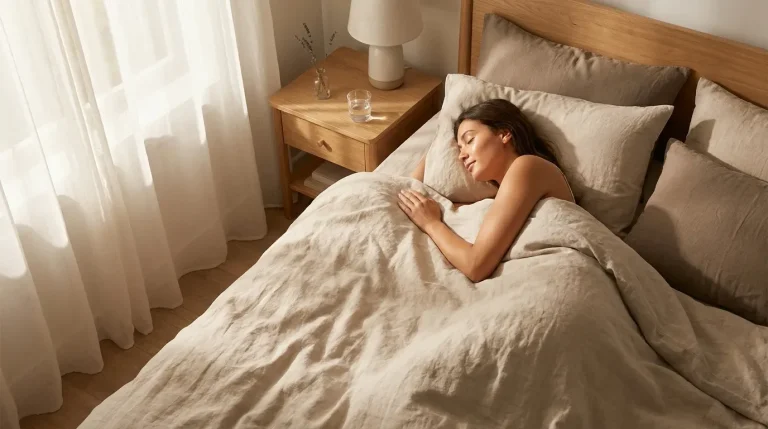
Disorganization also affects sleep quality. Clutter negatively stimulates the mind, making it difficult to relax.
An organized bedroom invites rest. The tranquility of the space helps calm the mind.
A study in the Journal of Environmental Psychology corroborates this idea. In 2010, researchers observed the relationship. People who felt more comfortable in their homes had less cortisol, the stress hormone.

Organization as Therapy: The Minimalist Method
THE home organization It can be seen as an active meditation. Focus on one task at a time. Start with drawers or cabinets.
This practice encourages mindfulness. You live in the present moment, free from distractions.
A practical example is the KonMari method. It encourages keeping only what brings you joy. The process of discarding is liberating.
Find out more: What to Avoid When Waking Up to Have a More Productive Day
The philosophy behind it is simple: "Be grateful for every object." And let go of what no longer serves you.
This act of detachment is symbolic. It's an opportunity to let go. Or to free oneself from burdens.
A Peaceful Mind, a Clean House: Examples and Statistics
Clutter can be a symptom of a problem, not the cause. It often reflects burnout.
Organization serves as an antidote. It's a way to reconnect. It's a self-care priority.
An interesting example is that of the writer. He struggled with writer's block. His desk was a chaos of papers.
After organizing his office, he noticed. His ideas began to flow again. His mental clarity was restored.
Another example is that of the student. The disorganization of her room prevented her from studying. She constantly procrastinated.
By creating a tidying schedule, she noticed. Her productivity increased exponentially. She improved on her exams.
++ Wide Leg or Skinny Jeans? How to Choose the Ideal Style
A survey by the National Association of Professional Organizers showed that 80% of people believe that home disorganization negatively affects their quality of life.
External chaos is a reflection, not a cause. It's as if your home is crying out for help.
Imagine your home as a mirror. It reflects your state of mind. A tidy home is a safe haven.
THE home organization It's an act of self-love. And respect for your space and yourself.
Organizing Chaos
THE home organization It doesn't have to be a burden. Small changes make a big difference. Start with a drawer.
Establish a 15-minute daily routine. This prevents clutter from accumulating. This is the key to success.
A clean desk makes work easier. A distraction-free environment increases concentration.
At the end of the day, take a moment. Put away items, fold clothes. And get ready to rest.
The following table shows the correlation:
| Tidy Environment | Disorganized Environment |
| Stress reduction | Increased anxiety |
| Increased productivity | Difficulty focusing |
| Improved sleep quality | Insomnia and agitation |
| Sense of control | Feeling of helplessness |
| Improved mood | Irritability |
It's important to cultivate the habit. Organization isn't about perfection. It's about well-being.
Having an organized home is synonymous with lightness. It's a calming environment. And it inspires you to be your best self.
THE home organization is the home organization of your life, of your being. It's an investment.
When life becomes chaotic, tidiness is our anchor. It's our safe harbor.

A refuge for the soul in Home Organization
Taking care of your space is taking care of yourself. home organization is an act of self-love. It's a form of honor.
The environment we live in influences our thoughts, emotions, and actions. Having an organized home is essential.
It's a refuge for the soul. A space for the mind. So why not start building your sanctuary of peace and tranquility today?
Frequently Asked Questions about Home Organization
1. Is disorganization always a sign of a mental health problem?
No, not always. Disorganization can be the result of a busy life, fatigue, or lack of time.
However, if it becomes chronic and interferes with your daily life, it may be a symptom of underlying issues such as depression, ADHD, or burnout, and it's important to seek professional help.
2. Is minimalism the only way to have an organized home?
No. Minimalism is a philosophy, but home organization can be done in any style.
The important thing is that your space works for you, that it is functional and that it brings you peace and joy, not more stress.
Other sources: The benefits of a tidy home for your mental health
Read more at: The benefits of a tidy home for your mental health
Read more at: Mental health: what does organizing your home have to do with it?
++ Home for mental health: understand the relationship between the two