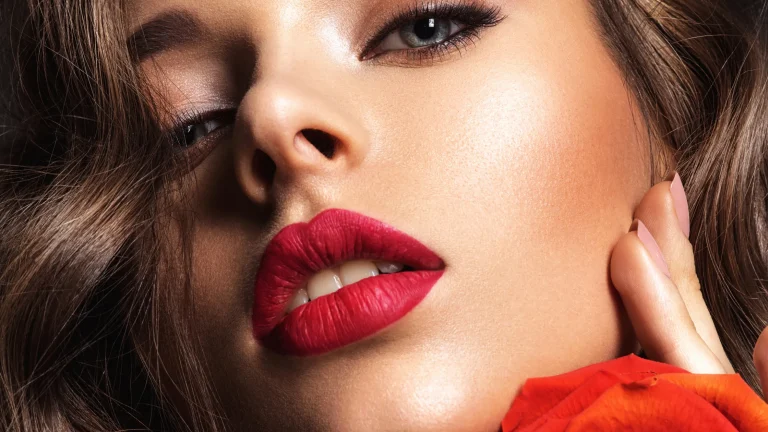


Makeup has the power to reveal what is already beautiful. But for a long time, the industry ignored dark skin tones. Products that were ashy, colors that didn't show up, formulas that didn't respect the particularities of the skin. The result was always the same: frustration.
Advertisements
Today, the scenario is beginning to change. But knowing how to choose is still essential. makeup for black skin It needs to do more than just function — it needs to enhance. And to do that, you need to understand in depth what harmonizes with each undertone, each texture and each intensity.
When makeup speaks to the skin, it stops being a correction and becomes an expression. And that’s what turns the mirror into recognition — not comparison.
Each black skin tone carries a unique identity
Dark skin is not just one type. There are a multitude of tones, undertones and contrasts. Some skins are warmer, others cooler. There are olive, reddish and golden undertones. And each one responds differently to the same color.
That’s why there’s no single type of foundation, concealer, or lipstick that works as a standard. Makeup needs to keep up with this diversity. When you find the right shade, your skin doesn’t just “look made up” — it looks alive.
That's where the difference between covering and revealing lies.
Read also: Nighttime Secrets to Wake Up with Radiant Skin
The texture of black skin also deserves attention
Makeup for dark skin needs to take into account not only the color, but also the skin's behavior. Often, there is greater oil production in some areas, dryness in others, and a sensitivity that requires well-thought-out formulas.
Lightweight formulas that respect the skin's natural hydration tend to work best. Finishes with a subtle sheen enhance the face's natural light without weighing it down. Very dry textures can cause cracking, and very thick foundations can erase natural contours.
When the texture is well chosen, the skin moves with the makeup — and not against it.
The graying is not your fault — it is a fault in the formula
How many times have you applied foundation and felt your face “lose color”? This isn’t because your skin is difficult. It’s because the product wasn’t designed for it.
A grayish effect is a sign of an incompatible undertone. It is the result of formulas that are too neutral, too cool or poorly pigmented. When the tone is wrong, the skin loses presence. It looks dull, even with makeup on.
Makeup for dark skin needs to have pigment. It needs to have presence. It needs to respect the warmth, depth and vivacity that exist in your face.
The right shine doesn't weigh you down — it celebrates you
For years, shine was avoided on dark skin. The rule was to “matte everything.” But this erased more than it controlled. The right light, applied in the right places, enhances. It brings life, structure and presence.
Golden, bronze, and copper highlighters. Creamy textures that melt into the skin. Vibrant blushes that don't fade with foundation. All of this is part of a makeup look that celebrates, not erases.
It's not about looking made up. It's about looking whole.
Color that appears is color that respects
Eyeshadow that disappears, lipstick that changes shade after application, blush that fades — these are all signs of a poorly formulated product. When a color is made for fair skin, it needs to be very concentrated to work on darker skin tones. And many aren't.
Makeup for dark skin needs to deliver real color. It needs to be pigmented, long-lasting, and stay vibrant even after hours. Because a dark face is not a backdrop — it is a presence. And the makeup needs to live up to that.
Finding your color is finding your presence again
When you find the right shade, the mirror changes. Foundation sets. Blush pops. Contour defines without caking. Lipstick doesn’t look fancy—it looks like an extension of your mouth.
This feeling of recognition is worth more than any trend. It’s worth more than any technique. Because when makeup enhances your appearance, it gives you more than just your image. It gives you a sense of belonging.
The beauty that begins on the face spreads to posture
When makeup respects, the reflection returns
Applying makeup to dark skin is an act of presence. It’s not about hiding, disguising or softening features. It’s about intensifying what’s already strong. When the products are right, when the tone fits, when the color appears as it should, it’s not just the image that changes — it’s the entire perception that transforms.
It's the end of the search for a foundation that "can be used", it's the end of the forced adaptation with lighter powder, with pigment-free highlighter, with lipstick that turns into something else, when you go into a store and know that you're going to leave with something that really works.
That was designed for you. That recognizes your skin as a reference — not an exception.
This change begins in the industry, but it gains meaning in the mirror. Because what matters is not following trends. It is seeing yourself. Recognizing yourself. Affirming yourself.
And when makeup allows this, it stops being a product. It becomes an extension of your language. A silent way of saying: my skin doesn't need to fit in. It just needs to be respected. And now, finally, it is.
Frequently Asked Questions About Makeup for Dark Skin
Why do many foundations still leave my skin looking ashy?
Because the formula doesn't respect your undertone. Many foundations use pigmentation designed for light skin, which distorts the result on dark skin.
How do I find my skin undertone?
Observe how your skin reacts to natural light, jewelry, and clothing. Warm tones look good with gold; cool tones go well with silver. But the best thing to do is to test it on your own skin, calmly and in real light.
Which blush colors are most flattering?
Vibrant shades work well: wine, burnt orange, dark coral. The important thing is that the pigmentation is strong enough to appear natural.
Does highlighter really work on dark skin?
Yes. When the tone is right—gold, bronze, copper—it enhances the high points of the face with elegance and depth.
Does makeup for dark skin need to be expensive to work?
No. There are affordable brands that work with correct pigmentation. The important thing is that the formula respects color and texture — not the price of the packaging.