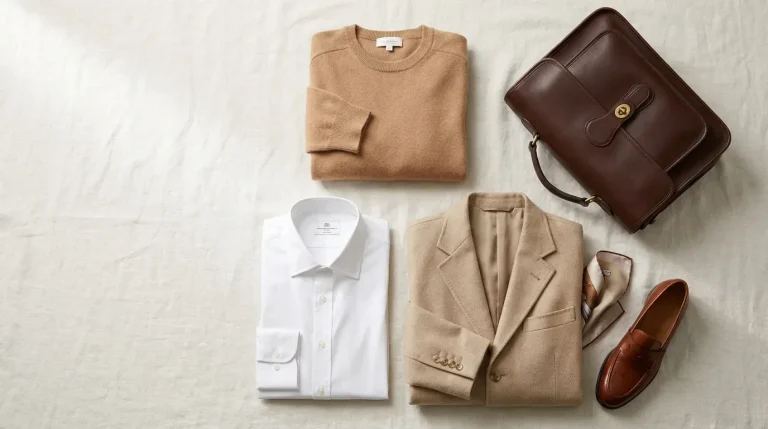


First impressions count. And in a job interview, they start before the conversation even begins. job interview looks They are more than clothes — they are a silent speech that communicates seriousness, preparation and security.
Advertisements
They say a lot about how you see yourself, about the respect with which you treat that opportunity and, most importantly, about how you want to be perceived.
That’s why choosing the right look for this moment can be so challenging. It’s not about following a rigid formula or a rigid model, but about understanding what makes sense for you within that context.
It’s about aligning image and intention. Want to know how to do this in a light and safe way? Keep reading.
When Style Meets Occasion
Dressing for an interview doesn’t mean giving up your identity. On the contrary, it’s about finding a common ground between who you are and what the environment demands.
This means recognizing the type of company, the organizational culture, the sector of activity — and, within that, choosing pieces that communicate the best you have to offer.
A well-chosen outfit doesn't have to be over the top. It should be clean, coherent and comfortable. It should allow your personality to shine through subtly, without competing with your speech. When you feel good about what you wear, your posture changes.
The body aligns, the voice gains firmness, the gaze lights up. Confidence comes from this place: from the truth between you and the mirror.
Elegance Lies in Simplicity
Often, the mistake is in excess. In wanting to impress too much, we end up going beyond what is necessary — and this can seem forced.
Elegance, in this context, is just the right amount. A well-made cut, a well-fitted piece, a color that flatters your skin tone and a subtle choice of accessories are enough to create an impact.
Avoid uncomfortable pieces or pieces that require constant attention. If you spend an hour trying to adjust your necklace, pull up your skirt or hold up your blouse, your focus will be distracted.
The ideal outfit is the one that disappears during the conversation — because it doesn’t bother you, doesn’t distract you, doesn’t weigh you down. It serves as a base for what really matters: your presence.
Read also: Minimalist Makeup: How to Create Amazing Looks with Few Products
Colors that Speak for You
You don't have to wear black to be taken seriously. Colors also convey messages and can be great allies in creating a confident and authentic look.
Neutral tones like navy blue, beige, gray, and white work well as they communicate serenity, professionalism, and clarity.
But that doesn't mean you should erase your own identity. A touch of color in your accessories, a soft lipstick, or a piece with personality can be the difference that shows that you have style and know how to use it intelligently. The secret is balance. Nothing that distracts, everything that complements.
Comfort Is Also Strategy
You will only be able to concentrate on the interview if you are comfortable with what you are wearing. Physical discomfort creates emotional discomfort.
Shoes that are tight, fabrics that are itchy, pants that don't allow you to sit up straight — all of these undermine the confidence you need to convey.
The ideal look respects your body. It allows you to move naturally, breathe easily and maintain a light posture.
And this is also a way of communicating confidence: showing that you are present in the moment, without distractions, without insecurities created by your clothes.
The Silent Language of the Image
Clothes don’t speak, but they communicate. They build meaning before you say a word. In corporate environments, where judgments happen in seconds, your image needs to work in your favor. This is not about vanity. It’s about strategy.
Dressing well for an interview is a way of showing respect — to yourself, to the person who will be receiving you, to the opportunity that is before you.
It is a choice that shows care, attention to detail and maturity. Characteristics that are highly valued in any selection process.
Authenticity Also Impresses
There is no uniform for success. What really impresses is authenticity. People who are connected to their own identity convey confidence, even without saying a word. And this applies to everything: from the way you position yourself to the way you dress.
If your style is more casual, find a more elegant way within it. If you prefer classic pieces, wear them appropriately.
The important thing is that the visual is aligned with what you want to communicate. Trying too hard can make you seem insecure. Making a conscious choice shows maturity.
Beauty is in the Details
To choose the right look for a job interview goes beyond aesthetics. It is a gesture of self-knowledge and respect.
When you dress with intention, you convey professionalism before you even speak. And that doesn’t mean following rigid rules, but rather understanding what communicates confidence in you — because true confidence doesn’t come from what you wear, but from how you carry it.
Feeling good about what you wear is what allows your essence to shine through. That’s what creates connection. That’s what truly impresses.
More than just fitting in, your look needs to represent who you are with coherence and lightness. And when that happens, your clothes become a silent ally of your presence.
The interview is an important moment. And you deserve to arrive there with your posture upright, your voice firm and the style that best reflects your truth. The secret is to prepare yourself — inside and out. And that starts in the mirror.
Frequently Asked Questions About Job Interview Outfits
What is the most common mistake when choosing what to wear for an interview?
Exaggerate. Either in excess of formality or in excess of casualness. Balance is always the best choice.
Is it necessary to wear high heels to look more professional?
No. The important thing is to be comfortable and have a confident posture. A clean, well-maintained, low-heeled shoe conveys as much professionalism as a heel.
Can I wear makeup to an interview?
Yes, as long as it is discreet and makes you feel good. Makeup should enhance your features, not steal attention.
Are colored clothes a problem?
No. Soft, well-combined colors can convey creativity and authenticity. The secret lies in common sense and balance.
Should I adapt my look to the type of company?
Yes. A creative startup requires a different look than a traditional bank. Researching the company helps align expectations and image.