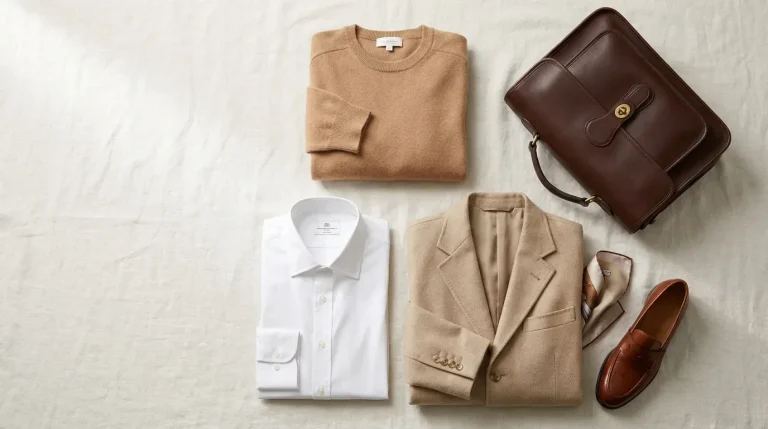


Knowing how to dress is different from following fashion. It's about recognizing yourself in the mirror, feeling coherent with what you're wearing, and letting your clothes effortlessly reflect who you are. But for many people, this process seems distant — as if they needed to hire an image consultant to do it.
Advertisements
But it is possible, yes, discover your personal style without spending a dime. And when that happens, your wardrobe starts to make more sense. Shopping trips slow down. Mistakes stop happening. The image you project starts to align with the person you already are — only with more intention.
Style cannot be bought. It can be observed, built and confirmed over time.
Personal style doesn't come from scratch, it's already there
Before thinking about trends, you need to look at yourself. Your style is already there, even when you’re not aware of it. It’s in the pieces you repeat. In the clothes you choose on days when you need to feel strong. In that look you love, but that you keep saving “for a better occasion.”
Discovering your personal style is about noticing the pattern behind these choices. What do they say about what you value? About how you want to be perceived? About what makes you feel confident?
Read also: Timeless Pieces: The Secret to Never Going Out of Style
The mirror starts to help when you change your perspective
Many people look in the mirror looking for flaws. Measuring where it's tight, where it's too loose, where the belly shows. But the mirror, when used well, becomes a tool — not an enemy.
When trying on an outfit, notice what it brings out. Does it make you feel more relaxed or more tense? Does it make you walk more firmly or more hunched over? Does it fit your day or does it make you look like a character?
The answers to discover your personal style They’re all there. You just need to change the question. Instead of “Is this outfit in style?” ask: “Does this outfit look good on me?”
Your style has more to do with rhythm than aesthetics.
Some people feel comfortable with layers, cutouts and bold prints. Others prefer fluidity, simplicity and light fabrics. This isn't just about taste — it's about internal rhythm.
More introspective people, for example, tend to seek simplicity in shapes. Those with more extroverted energy generally feel comfortable with more contrast. And neither is right or wrong. The important thing is that the clothing follows this flow — not blocks it.
When the piece respects its rhythm, the body relaxes. The way you walk changes. The voice gains stability. And your appearance becomes part of who you are, not an effort to appear to be something.
The most common mistake is to search for reference without context
You can admire an aesthetic and it just doesn’t work for you. And that’s okay. That’s not a limitation — it’s aesthetic intelligence.
A look that works for someone else may not make sense for your routine, your body type, or your emotional temperature. Copying without context leads to frustration. The closet fills up, but the feeling of “I have nothing to wear” persists.
That’s why seeking inspiration is great — but it needs to be accompanied by a filter. Always ask yourself: Does this work in my life? Does this piece match what I already have? Can I imagine wearing it in more than one situation?
The clothes you avoid say as much as the ones you wear
What you don’t wear also communicates. That piece of clothing that remains untouched on the hanger. The outfit that looks nice but never leaves the house. The trend you bought to “try something new” but that makes you feel disguised. All of this reveals not only what doesn’t fit — but what you, deep down, already understand that you don’t represent.
These absences are valuable clues. They show what you forced to please. What you wanted to wear to belong. What came more from external expectation than from internal listening.
By looking at these pieces carefully—without guilt, without judgment—you begin to recognize the limits of your style. And by recognizing those limits, you refine your identity. You see where the coherence lies. You discover what truly makes sense.
The closet stops being a testing ground and starts becoming a space of confirmation. Because knowing what to avoid is as liberating as knowing what to choose.
When style takes hold, clothes stop being noise
What was once a doubt becomes intuition. You look at your closet and know what makes sense. You no longer need to try ten combinations to feel comfortable. You no longer waste time with insecurity. Style stops being a search and becomes an expression. You stop dressing to please and start dressing to be.
The body feels. The mind calms down. The clothes no longer generate noise because they do not conflict with your identity. They do not question. They confirm.
This change doesn’t happen all at once. But when it does, you realize: your external image is finally aligned with what you feel inside. And this reduces noise in everything—in your decisions, in your judgments, in your comparisons.
It is the moment when you recognize yourself clearly and wear what reinforces, not what hides.
Frequently Asked Questions About Discovering Your Personal Style
Does discovering my personal style require buying new clothes?
No. Style comes from observation, not from purchase. Often, it is already present in the pieces you wear most and you don't even notice.
Is it possible to have just one style, even if you like different things?
Yes. Personal style can be versatile. The important thing is to understand what connects these variations — what they have in common.
How to deal with insecurity when trying something new?
Take it easy. Testing doesn’t mean committing. Try it at home, see how you feel, and see if it works with your body and routine.
Is it wrong to change your style over time?
On the contrary. Style follows your phase of life. Change is a sign of evolution — not incoherence.
Is it worth following trends even if you have a defined style?
Okay, if it makes sense to you. The trend only works when it amplifies what already exists in you. Never when it tries to replace it.