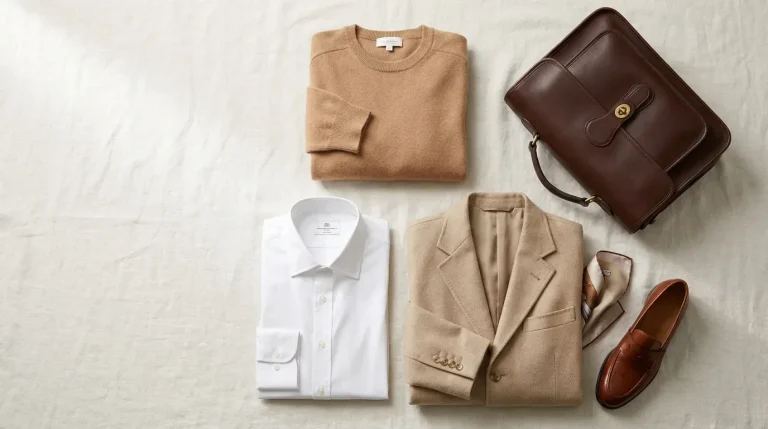


The closet is usually the first place where confusion begins. Clothes that no longer fit, pieces that don't match, prints that have lost their charm. We put on one and feel like something is missing. We put on another and don't recognize ourselves in the mirror. Until we realize that we have everything — except clarity.
Advertisements
It is precisely at this point that the Minimalist Style starts to make sense. It's not about having less out of obligation, but about seeing better what is really part of you.
A minimalist wardrobe isn’t empty. It’s intentional. Every piece has a reason to be there. Every choice reflects a deeper care for who you are, what you live, and what you wear.
This path doesn’t have to be radical. Nor immediate. But when you start, you realize how much excess weighs — not only in your drawer, but also in your routine. And that by reducing, you make room for much more than clothes.
Fewer Pieces, More Identity
The big turnaround for those who choose the Minimalist Style It's not about the quantity, but about the connection. There's no point in having fifty blouses if none of them represent you. Having fewer pieces, when well chosen, means having more real possibilities.
When your wardrobe begins to reflect your essence, getting dressed stops being an effort. It becomes an expression. The time spent in front of the mirror decreases. Doubt disappears. And confidence grows.
Clothes aren’t just for covering your body. They shape the way you occupy the world. And when you start to choose more consciously, you realize that you need much less to feel whole.
How to Choose What Stays
It can be confusing at first. It’s common to look at your clothes and think, “What if I need this one day?” But the more useful question is, “Does this item of clothing represent who I am today?”
Holding on to pieces that no longer make sense is like carrying around old versions of yourself. Sometimes it’s hard to let go. But when you allow yourself to let go, something aligns inside. And what’s left is lighter, more real.
What remains in your closet should be comfortable, versatile and true to your lifestyle. It's not about trends.
Read also: How to put together a capsule wardrobe? Essential pieces
The Courage to Repeat
One of the most deeply rooted myths in fashion is the fear of repeating an outfit. As if repeating was synonymous with carelessness or limitation. But those who choose the Minimalist Style knows that repetition is a sign of clarity. Of authenticity.
Wearing the same piece in different contexts shows creativity, confidence and autonomy. It shows that you are in control of what you have — and that you don’t need more to express yourself well.
When you start to wear something with intention, you discover that style isn't about the newness. It's about the look. The combination. The story that each piece of clothing carries, each time it's worn again.
The Value of Key Pieces
There is no such thing as a minimalist wardrobe without foundation. Some pieces are like pillars. They don't need to be expensive or sophisticated. They need to be functional. They need to last.
Choosing well is what makes it possible to have less. A good pair of jeans. A shirt that fits you elegantly. A pair of sneakers that go with you in different scenarios. A coat that protects and also communicates.
These pieces support the others. They allow for variations. They bring freedom. Because minimalism is not about limitation. It is about openness. To create more with less. To discover combinations that previously went unnoticed.
Style Is Also Silence
THE Minimalist Style It doesn't need to be announced. It reveals itself in subtlety. In the attention to detail. In the absence of excess.
In times of constant stimulation, choosing less is almost an act of resistance. While everything screams for attention, the minimalist style invites silence. And in this silence, beauty appears more clearly.
It's like entering an organized environment after passing through a place full of noise. The calm is almost physical. The body responds differently. The mind relaxes. And the eye recognizes what was previously hidden behind the excess.
The Pleasure of Recognizing Yourself in Your Own Image
Putting together a wardrobe with just a few pieces doesn’t mean giving up on style. It means taking a deeper look. Exploring the layers of what you really like. Eliminating the noise.
Over time, you notice that your clothes start to talk to each other. And more importantly, they talk to you. The mirror no longer brings confusion, but coherence. You feel more aligned on the outside because you are more aligned on the inside.
Dressing is no longer an attempt to please or impress. It becomes an exercise in authenticity. Choices become more about emotional comfort than external expectations.
It is at this point that fashion stops being just about consumption and becomes about expression. The body stops wearing trends and starts wearing intention. And that changes everything.
You start to see yourself more kindly. You start to recognize your silhouette naturally. You start to like what you see, not because it fits a standard, but because what you wear makes sense with who you are.
This recognition doesn't come from the mirror. It comes from the process. From having looked in the closet, made choices with truth, and left only what speaks to the life you want to live.
When the image reflects what is essential, the style doesn't need much. It just needs to be yours.
Minimalist Style FAQ
Do I need to get rid of everything to have a minimalist style?
No. Minimalism starts with intention. You can start by keeping what still makes sense and gradually making room for it.
Can a minimalist wardrobe have color?
Yes. Minimalism does not require everything to be neutral. It invites you to choose colors more consciously, without exaggeration.
Is it possible to have a striking style with just a few pieces?
Definitely. When your pieces reflect who you are, your visual identity becomes stronger, even with fewer options.
How do you know which pieces to keep?
Pay attention to what you actually use. What makes you feel good, what suits different situations, what continues to work in your day-to-day life.
Is it worth investing in more expensive pieces in minimalism?
If the piece is durable, versatile and of good quality, yes. In minimalism, the real cost-benefit comes from the time of use — not the quantity.