
If you want to learn how to care for curly hair, you're in the right place! Read on for some tips!
Advertisements
Remember the first time you decided to show your curls to the world? It was a special moment, when you saw a more authentic version of yourself.
Taking care of curls can be challenging, but it's very rewarding. They deserve attention to stay healthy and defined.
With the right tips, your hair routine can become a self-care ritual. It's important to understand your hair structure and use the LOC method.
Choosing sulfate-free products also helps a lot. By applying products correctly, you avoid frizz and enhance your curls.
Let's learn how to care for your curls together. It's a fun and enriching journey.
Understand the structure of curly hair
You curly hair have a special structure that needs specific care. It is important to know the types of curls to choose the best treatment.
Each hair type, from 2A to 4C, has unique characteristics that influence care. Type 4 is already considered curly and requires more intensive care, but the tips mentioned here can help.
THE capillary porosity is very important. It shows how the strands absorb and retain moisture. High porosity hair loses moisture quickly, while low porosity hair retains moisture longer.
The spiral structure of curls affects the distribution of sebum. This can lead to dryness and brittleness. Understanding this helps you create a care routine for curls more effective.
Read also: Hair care: tips for healthy hair
| Curl Type | Features | Ideal Care |
|---|---|---|
| 2A | Soft waves, little volume | Light products, avoid overloading |
| 2B | More defined waves, moderate frizz | Lightweight leave-ins, frizz control |
| 2C | Well-defined waves, tendency to frizz | Anti-frizz products, regular hydration |
| 3A | Loose, well-formed curls | Gel or mousse for definition |
| 3B | Tighter curls, volume | Combing cream, deep hydration |
| 3C | Dense curls, dense texture | Nourishing oils and masks |
| 4A | Tight spirals, dryness | Thick cream, intense hydration methods |
| 4B | Smaller spirals, high frizz | Emollient products, silk pillows |
| 4C | Very tight curls, fragility | Butter creams, protection techniques |
Choosing the right products to care for curly hair

When you choose products for take care of curly hair, It is important to look for those that meet your needs.
Natural ingredients are essential for moisturizing and strengthening curls. They help prevent dryness and breakage.
It is essential to choose products sulfate-free and silicone-freeSulfate-free shampoos and conditioners are gentler and preserve hair oils.
Silicone-free products are also good, as they prevent residue on the hair, leaving it light and healthy.
Brands like Deva Curl, Yenzah and Lola Cosmetics are recommended. They are known for their quality products for curly hair. They offer shampoos, conditioners, masks, and finishing products.
Check out some natural ingredients that are good for curly hair:
- Shea Butter – Provides deep hydration and intense nutrition.
- Coconut oil – Improves hair hydration and shine.
- Aloe Vera – Helps define curls and reduces frizz.
- Argan Oil – Strengthens and repairs damaged hair.
| Product | Features | Brands |
|---|---|---|
| Shampoo | Sulfate-free, moisturizing ingredients | Deva Curl, Yenzah |
| Conditioner | Silicone-free, natural nutrients | Lola Cosmetics, Deva Curl |
| Hydrating Mask | High concentration of emollients | Yenzah, Lola Cosmetics |
| Finishers | Definition and control of frizz | Deva Curl, Lola Cosmetics |
How to wash curly hair correctly

When it comes to washing curly hair, it's essential to use specific techniques. This helps keep your curls healthy.
THE co-wash It's a good choice because it only uses conditioner to cleanse. This prevents the shampoo from drying out your hair.
In addition to the co-wash, the no-poo and low-poo method are also good for keeping curls hydrated and defined.
- No-poo method: This method doesn't use shampoo. Instead, it uses baking soda or apple cider vinegar to cleanse. It's great for dry and sensitive hair.
- Low-poo method: This method uses low-sulfate shampoos. This maintains natural oils and helps maintain defined curls.
For a washing curly hair effective, wash your hair 2 to 3 times a week. This prevents excessive dryness.
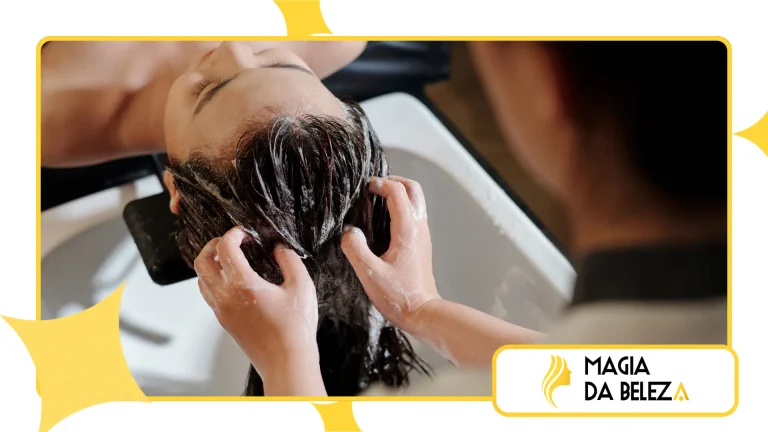
Don't forget to massage your scalp while washing. This helps blood circulation and hair growth.
After washing, use the "taping" technique to condition. This involves applying conditioner or cream strand by strand. Roll your hair with your fingers to define each curl.
To dry, avoid traditional towels, which can cause frizz. Use a microfiber towel or a cotton T-shirt to remove water.
These materials are softer and maintain curl definition.
| Method | Frequency | Benefits |
|---|---|---|
| Co-Wash | 2 to 3 times a week | Hydration, softness |
| No-Poo | 1 to 2 times a week | Preserves natural oils, ideal for dry hair |
| Low-Poo | 2 to 3 times a week | Gentle cleansing, less dryness |
| Scalp massage | In every wash | Stimulates circulation, healthy growth |
| Fitting | In each condition | Definition of curls |
Finishing methods to enhance curls

Understanding curl-finishing products is essential. Each one has a specific purpose and can enhance curls in different ways. Let's look at the main options and how to use them for best results.
THE styling cream for curls It's great for hydration and soft definition. Use it on damp hair, applying it to sections. Scrunch your hair to help form curls.
THE gel for curly hair Provides strong hold and precisely defines curls. Apply a small amount of gel to your hands and work it through your hair. Scrunch to activate the curls.
Mousse is great for those looking for extra volume. Apply it from roots to ends on damp hair. Scrunch your curls to maintain definition and volume.
“The correct product application technique is essential to avoid frizz and ensure your curls stay defined and beautiful throughout the day.”
To dry, choose between a diffuser and natural drying. A diffuser, on low heat, reduces frizz and speeds up drying. Natural drying is great, but don't touch your curls to avoid frizz.
Protect your hair from heat with a heat protectant. Use it with blow dryers or heat tools. This keeps your curls healthy and prevents damage.
The Importance of Hydration and Nutrition
Having healthy curly hair requires a hair schedule well planned. This plan should mix hydration, nutrition and reconstruction.
Each of these steps addresses the unique needs of your curls. hydration for curly hair It helps replenish the hair's natural water content. Nutrition provides lipids that combat dryness.
To create an effective routine, choose products with aloe vera, coconut oil, and hydrolyzed proteins. These ingredients are crucial for the health of curly hair.
They offer deep hydration and nutrition. Using a hair mask Proper care further improves results, leaving hair soft and shiny.
Here's a suggested schedule with popular products and natural options:
| Stage | Key Ingredient | Recommended Product | Frequency |
|---|---|---|---|
| Hydration | Aloe Vera | Skala Aloe Vera | Twice a week |
| Nutrition | Coconut oil | Novex Coconut Oil | Once a week |
| Reconstruction | Hydrolyzed Proteins | Wella Professionals Fusion | Biweekly |
For those who like to do things for themselves, mixing avocado with olive oil makes a great hair maskBut don't forget to watch your diet and drink plenty of water. This directly affects the health of your hair.
Protecting dry hair while sleeping
Taking care of curly hair at night is very important. This helps keep strands healthy and prevents damage like frizz and breakage.
Use a satin pillowcase or silk instead of cotton is a good idea. Satin reduces friction between your hair and the pillowcase, better protecting your curls.
Another tip is to use a satin cap. It protects curls and minimizes tangles by covering the hair. This prevents friction that can occur while sleeping.
For perfect curls in the morning, try the "pineapple" method. This involves tying your hair at the top of your head with a soft elastic band. This keeps your curls in place and prevents them from getting flattened.
| Method | Benefits |
|---|---|
| Satin Pillowcase | Reduces friction, prevents frizz |
| Satin Cap | Minimizes tangles, preserves curls |
| Pineapple | Prevents dents, maintains the shape of curls |
Finally, apply nighttime products like leave-in conditioners and lightweight oils. These treat your hair while you sleep.
This nighttime care is essential for the health and appearance of your curls, providing hydration and definition.
Hairstyles to enhance curls
It's easy to enhance the beauty of curly hair with the right hairstyles. If you're looking for hairstyles for curly hair, has several options.
They will enhance your natural curls, bringing elegance and practicality to everyday life and special occasions.
For everyday wear, a messy high bun is perfect. Throw your head down, gather all your hair, and wrap it into a high bun.
Use hair clips to secure and adjust as needed. Add curl accessories how colorful scrunchies can increase the charm of this look.
Another practical option is the side braid. Part your hair down the middle and braid it on one side. Leave a few strands loose for a more casual look.
For formal events, the curl styling can involve sophisticated hairstyles such as half-updos with ribbon or flower details.
Check out some accessory ideas that can make a difference to your look:
| Accessory | Use | Style |
|---|---|---|
| Hair Bands | To keep curls out of your face and add color | Casual and feminine |
| Scrunchies | For buns and ponytails | Retro and fun |
| Hair Clips | To hold loose strands | Discreet and elegant |
With these tips, keeping your curls beautiful and well-groomed will be easier and more enjoyable. Explore these options and find your favorite style!
Tips for caring for curly hair in different seasons

Keeping curly hair beautiful and healthy can be a challenge. But with specific care, you can weather any climate change.
In summer, it's essential to protect your hair from chlorine and salt. These can dry out and damage your curls.
Also, use products with sun protection. This prevents fading and frizz.
In winter, the cold and lack of humidity dry out curly hair. To combat this, use deep-hydrating creams and nourishing oils. They help maintain the hair's natural moisture.
Another important tip is to avoid washing your hair with very hot water. This can strip your scalp of its natural oils, leaving your curls dry.
Here is a table with the main ones care for curls in summer and in the winter:
| Station | Necessary Care |
|---|---|
| Summer | Use of hair sunscreen, wash with cold water, rinse with fresh water after swimming in the sea or pool |
| Winter | Weekly deep hydration, use of nourishing oils, avoid hot water when washing |
Adaptation is the key to maintaining curly hair and the weather in harmony. Remember to adjust your care routine as needed. This way, you'll ensure healthy, vibrant curls all year round.
Conclusion
We explore various techniques and care for curly hair maintenanceIt's crucial to understand the structure of curly hair and choose the right products.
Each step is important for the health and beauty of your curls.
We discussed the importance of hydration and nourishment for soft, defined hair. We also talked about protecting your hair while sleeping and using tips for any season. This helps maintain curly hair maintenance effective.
We encourage you to learn more about your hair type. Try new products and techniques to find your ideal routine. Share your experiences and results. Let's celebrate each hair care achievement together!