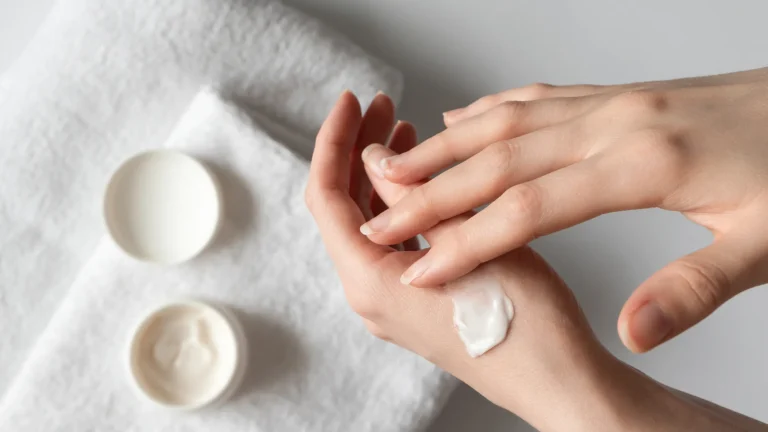

Dealing with hormonal spots It requires a deep understanding of skin physiology, going beyond superficial solutions.
Advertisements
These marks, triggered by endocrine fluctuations and intensified by radiation, demand a strategic routine of cell protection and renewal.
Understanding the role of melanocytes and adopting smart active ingredients is the first step towards restoring uniformity and health to the dermis in a lasting way.

Summary
- The invisible origin: what stimulates the melanocyte?
- The systemic impact on dermal resilience.
- The science behind filters and visible light.
- Cutting-edge assets: from blockage to renewal.
- Practical protocol: a routine for prevention and control.
- Technical table of whitening agents.
- FAQ: What they haven't told you yet.
What are hormonal skin blemishes and how do they appear?
Unlike a simple summer freckle, a spot of endocrine origin — melasma — functions as a persistent cellular memory.
It arises because our melanocytes become hyper-reactive to fluctuations in estrogen and progesterone.
There's something almost choreographed about this process: hormones prepare the ground, and ultraviolet radiation triggers the final effect.
Often, these brownish marks appear symmetrically, like a map on the upper lip or forehead. It's a common mistake to try to "erase" these spots with harsh exfoliants.
The real treatment is silent and focused on reducing inflammation, not on brute force, which often generates the dreaded rebound effect.
How does hormonal balance directly impact skin health?
The endocrine system is the mastermind behind hydration and collagen production. When we enter transitional phases, such as pregnancy or menopause, the skin barrier loses some of its natural protection.
This leaves the skin exposed to micro-inflammations which, although invisible, are the perfect fuel for hyperpigmentation.
Maintaining healthy skin is a strategic defense mechanism. Dehydrated skin interprets any sun ray as a severe attack, responding with increased pigmentation.
++ Skin care while working from home: invisible risks
When we stabilize hydration, we send a calming message to the melanocytes, allowing the brightening agents to work in a less hostile environment.
Why is broad-spectrum sun protection non-negotiable?
Using colorless sunscreen on skin with melasma is like trying to block out the sun with a wide sieve.
Visible light — the kind that comes from your cell phone and LED lights — has enough energy to keep the spot active.
The secret lies in the iron oxide, present in colored filters, which acts as a real physical barrier.
Sunscreen isn't a one-time morning event, but a commitment every three hours. If the filter degrades due to sweat or friction, the protection crumbles.
Read more: Skin care using niacinamide: real benefits
Without this rigorous shield, any investment in skincare technology is neutralized by the constant pigment reactivation caused by the environment.
What assets should I choose for a truly functional routine?
Modern dermatology has abandoned caustic formulas in favor of intelligent molecules. Tranexamic acid, for example, is brilliant because it acts even before the blemish forms, blocking inflammatory messengers.
Niacinamide acts as a watchdog, preventing the pigment already produced from reaching the surface layers.
For those seeking skin renewal without irritation, next-generation retinoids remain unsurpassed. They force the skin to "shed" stained cells, but should be introduced with caution.
++ Makeup guide for eyes with wearable graphic liner 2026
Haste makes waste here; skin inflamed by excess acids will darken even further.

Comparison Chart: Active Ingredients for Pigmentation Control
| Active | Main Function | Best Time to Use |
| Vitamin C | Neutralizes free radicals. | Morning (Basis of the routine) |
| Tranexamic Acid | It inhibits the production signal. | Night or Morning |
| Glycolic Acid | Refines surface texture. | Night (Alternating) |
| Cysteamine | Intensive depigmenting agent | Night (Specific use) |
| Azelaic acid | Controls inflammation. | Morning or Night |
Prevention Protocol: Your daily routine in 2026
To prevent stains from forming or returning, consistency is the only viable approach. This protocol focuses on daytime protection and intelligent nighttime regeneration.
Morning (Protection and Antioxidants)
- Cleaning: Use a physiological gel that preserves the skin's pH.
- Antioxidant: Apply pure Vitamin C or Ferulic Acid to combat oxidative damage.
- Treatment: Serum with Tranexamic Acid 3%.
- Protection: Sunscreen SPF 50+ with color (essential for blocking visible light).
To understand the safety standards of these assets, it is worth consulting the technical notes from... Brazilian Society of Dermatology (SBD), which constantly updates protocols for Brazilian skin.
Night (Repair and Brightening)
- Double Cleaning: Use a cleansing oil followed by the gel to remove sunscreen residue.
- Whitening: Retinoic acid or Bakuchiol (natural alternative) to accelerate renewal.
- Recovery: A cream rich in ceramides or panthenol to restore the barrier while you sleep.
When do office procedures become necessary?
There are limits to what at-home skincare can achieve, especially for deep blemishes.
Microneedling with drug delivery It is a technique that "opens pathways" for active ingredients to reach the dermis.
Picosecond lasers, on the other hand, fragment melanin without generating the heat that usually irritates hormonally altered skin.
Chemical peels are also powerful tools, provided they are performed in a controlled environment. The idea is to exfoliate in a planned way, removing the pigment deposit without causing trauma.
However, the success of these methods depends entirely on the maintenance you do at home, before and after the sessions.
Habits that silence pigment production
Stress is not just a mental state; it manifests on the skin through cortisol. High cortisol levels disrupt sebum production and worsen melasma.
Including polyphenols in the diet, such as those found in green tea and dark fruits, offers a systemic layer of protection against aging and pigmentation.
Also avoid excessive heat. Very hot environments, such as saunas or professional kitchens, cause vasodilation, which can worsen the marks.
The use of physical accessories — tightly woven hats and sunglasses — is the final touch for those who want to maintain an even skin tone in the long term.
The journey to manage skin with persistent marks is ongoing and requires careful attention to one's own body's needs.
It's not about striving for perfection, but about managing the health of an organ that reacts to everything we feel and experience.
With the right tools and the strategic use of active ingredients, blemishes cease to be the main focus of facial appearance.
Current technology allows for a level of control that was previously impossible, restoring radiance and confidence without compromising skin integrity.
For a detailed analysis of the regulation of these components and new releases, visit the portal of Anvisa (National Health Surveillance Agency) It offers transparent data on what is safe for the Brazilian consumer.

FAQ:
1. Why does the stain seem to darken in the summer even when using sunscreen?
Infrared heat and visible light can stimulate melanocytes even through chemical filters. Furthermore, excessive sweating removes the product, leaving gaps in coverage.
2. Can pregnant women treat hormonal spots?
Yes, but with strict restrictions. Active ingredients like azelaic acid and vitamin C are safe, while retinoids and hydroquinone should be avoided until breastfeeding is complete.
3. Is there a relationship between diet and melasma?
Highly inflammatory diets, rich in refined sugars, can exacerbate oxidative processes in the skin, making it easier for blemishes to appear and hindering tissue recovery.
4. Does treatment need to be interrupted in winter?
On the contrary. Winter is the ideal time to use stronger acids and perform in-office procedures, since there is less sunlight, reducing risks.
5. Can I mix several acids in the same routine?
It is not recommended without guidance. A haphazard mixture can negate the effect of the active ingredients or cause a chemical burn, resulting in an even larger and more difficult-to-treat stain.
++ Oily and blemished skin: how to create a day and night routine