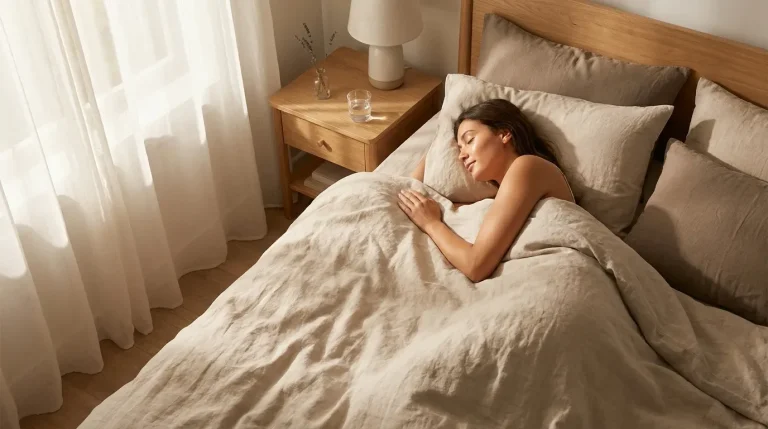


Free time has become uncomfortable. Cell phones fill every silent second. Social media provides constant stimulation. When there is space between tasks, our hands reach for a screen. Boredom—that old emptiness that once seemed pointless—has become something to be avoided at all costs.
Advertisements
But it is precisely in this space that something fundamental happens. importance of creative boredom is to allow the mind to slow down. Let thoughts wander. Let ideas mix without haste. And that, in the midst of apparent inertia, something new is born.
Well-being is not built solely through productivity, focus or performance. It is also formed in the space between things. In the interval. In the downtime that, when respected, is reborn as a fertile pause.
What is creative boredom?
Creative boredom is not apathy or lack of interest. It is a mental space where excessive stimuli give way to wandering. It is when the mind slows down the pace of tasks and, without having to react all the time, begins to wander more freely.
At first, it is uncomfortable. It seems unproductive, without purpose. But it is precisely this discomfort that creates space for something new to be born.
It is in this state that creativity ceases to be executive and becomes intuitive. You are not searching for solutions—but they begin to appear. You are not trying to be creative—but, effortlessly, ideas emerge, memories are organized, emotions settle. Boredom becomes fertile ground for new listening.
This type of break doesn’t depend on an ideal scenario. It doesn’t require absolute silence or unlimited time. It just requires that you tolerate the absence of distractions. That you stop running for a moment and allow your mind to wander along unplanned paths.
Understanding what creative boredom is means recognizing that a break, when well experienced, can be more powerful than any method. Because it is during this time that your perception begins to breathe again.
Boredom is not absence. It is silent fermentation.
When there is no external stimulus, the brain does not shut down. It reorganizes. It associates. It creates. Creative boredom is not passivity — it is digestion. It is when what you have seen, read, lived and felt begins to blend together in a deeper way, without the rush of an immediate response.
This slowness gives rise to unexpected connections. Solutions that did not come under pressure begin to emerge. Thoughts calm down. Emotions settle down.
But for this to happen, we must resist the urge to fill every void with distraction. Because the initial discomfort of boredom is not a sign of failure. It is just the beginning of the creative process that has not yet taken shape.
Read also: How Behavioral Therapy Can Help With Anxiety
The mind was not made to work in a straight line
The current productivity model demands continuous focus. But creative thinking is cyclical. It needs pauses to expand. It needs to step outside the logic of the task to access other layers. And this doesn’t happen under pressure.
When you allow yourself to have moments of aimlessness, you activate regions of the brain associated with imagination, empathy, and autobiographical memory. These are the areas that help you build new ideas, new perspectives, and new ways of understanding what you already know.
The importance of creative boredom lies precisely there: it accesses parts of you that remain silent when you are just producing.
Well-being is not in escape — it is in presence
Avoiding boredom is often a way of escaping from oneself. Of not facing the silence. Of not listening to what comes when everything stops. But well-being does not come from escaping. It comes from listening.
When you allow yourself to be without doing something, something settles. The body relaxes. The mind loosens up. Anxiety loses its strength. And creativity returns, not as an obligation — but as a flow.
This kind of presence doesn’t require effort. It requires permission. And it’s a permission that our current routine hardly offers anymore. That’s why creating spaces for boredom has become a necessity — not a luxury.
Boredom also organizes what's inside
Just as sleep organizes the body, boredom organizes the mind. It allows poorly digested emotions to find a place. It allows confused thoughts to settle down. It allows what was left in the background to gain visibility.
It is in this state that you realize what you have been avoiding. And that is when creative ideas are born not as something you produce, but as something you release.
The importance of creative boredom is not in inventing grand projects. It is in clearing away the excess so that something real can emerge. Because only in space does emergence occur.
Lack of stimulation is different from apathy
Many people confuse boredom with discouragement. But creative boredom is not apathy. It has life. It pulses. The difference is that it does not shout. It invites.
While discouragement takes away energy, boredom — when experienced consciously — preserves it. It feeds what is to come. It sustains the inner space needed for something new to find its place.
So it should not be avoided. It should be cultivated. Like a clearing between demands. A place where you can breathe and allow the invisible to begin to take shape.
The mind needs to wander to return with strength
Asking for concentration without giving a break is like demanding that someone run without stopping. It works for a while, then it breaks. The brain needs these moments of wandering. It needs to wander aimlessly. Only then does it come back sharper.
It's as if the focus were on inspiration. But boredom, on expiration. Without this cycle, thought loses depth. Creativity becomes copy. And well-being, superficiality.
Therefore, respecting boredom is not unproductive.
Creative boredom isn’t a waste of time — it’s reconnection
Routine teaches us that every minute needs to be filled. That doing nothing is a waste. That the value lies in producing, responding, delivering. But the truth is that no one can maintain this pace without losing something along the way.
Creative boredom doesn’t rob you of productivity — it restores balance. It reopens an inner space where ideas emerge with ease and clarity. It allows the body to breathe slowly and the mind to listen more deeply.
When you accept being silent, without distractions, you access layers that noise doesn't allow to appear.
That's where real well-being lies. Not in accumulation, but in the space between one thing and another. Allowing this emptiness is a gesture of maturity, presence and care for everything you still want to build.
FAQs about the Importance of Creative Boredom
Is creative boredom the same thing as procrastination?
No. Procrastination comes from avoiding tasks out of fear or resistance. Creative boredom is a space for conscious pause, which fosters insight and mental recovery.
Is it possible to cultivate creative boredom even with a busy routine?
Yes. Even five minutes away from screens, in silence, helps. What matters is the quality of the break, not the duration.
Does creative boredom really help with problem solving?
Help. When the mind slows down, it accesses solutions that were hidden by overstimulation or pressure.
What is the difference between resting and experiencing creative boredom?
Rest may involve passive stimulation (like watching something). Creative boredom requires more silence, more emptiness, more inner space.
Why do we feel guilty when we are not doing anything?
Because we associate personal value with productivity. But not doing something, when conscious, supports what comes next. It is part of the process, not a waste of time.